











This May marked an important milestone in Aalto EE's partnership with UONGOZI Institute reflecting 10 years of sustained collaboration between the two institutions.
The Institute of African Leadership for Sustainable Development, known as UONGOZI Institute, was established in 2010 by the Governments of Tanzania and Finland.
"Uongozi" means leadership in Kiswahili, and inspiring and strengthening leadership is the very heart of the organization's mission. The Institute serves individuals and organizations from both the public and private sectors across Tanzania and the wider continent.
Ten years of partnership
"For over 30 years, Aalto EE has offered high-quality executive education to leaders around the world, and our collaboration with UONGOZI Institute has been one of the most uplifting and meaningful partnerships I have had the privilege to be part of, " said director Kati Illikainen, who is working with this partnership at Aalto EE.
"We have brought together more than 700 leaders and executives from Tanzania and neighboring countries to learn and exchange ideas on leadership, sustainability, and change. Every single participant has rated the program as high quality and relevant to their work. This is a result we are immensely proud of. This is precisely the kind of impact we strive for: developing capable, responsible leaders as an investment in a more sustainable and equitable world."
"What makes this partnership truly special is how it has been built: drawing on both global and local expertise, embracing the unique context of Tanzania, and bringing together diverse voices from the public and private sectors. It has been equally wonderful to see our Aalto faculty find the experience enriching and rewarding. They feel they are bringing something truly valuable that participants can immediately apply in their work, while themselves gaining fresh perspectives and firsthand knowledge from a rapidly developing and diverse region.”
“Our decade-long partnership with Aalto EE has been a fruitful one, and I attribute this to the alignment of our interests. Both of us work to bridge the gap between the theory and practice of leadership. Our joint programs, Postgraduate Diploma in Leadership and Certificate in Leadership, use experiential learning that combines world-class faculty-led frameworks with real-world case studies and simulations to ensure immediate workplace impact”, said Kadari Singo, Chief Executive Officer of UONGOZI Institute.
Celebrating graduation
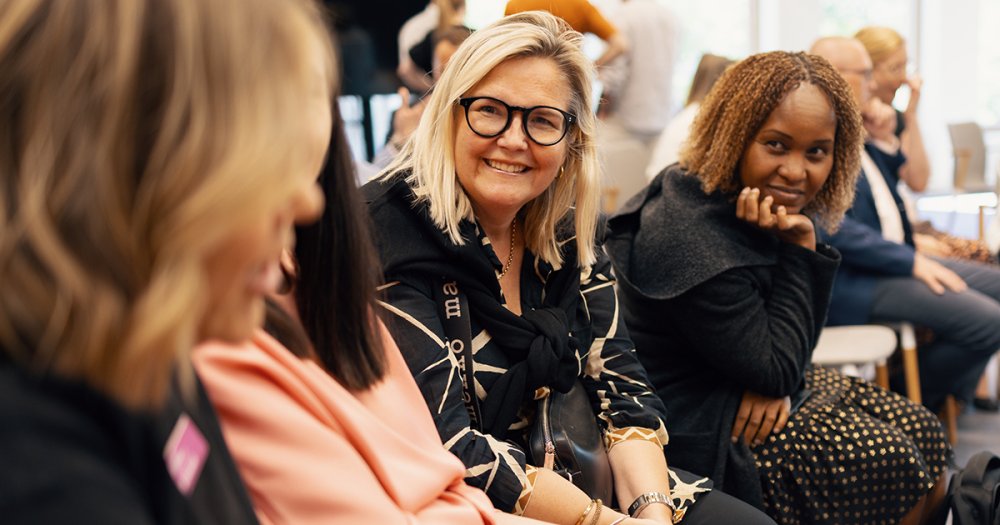
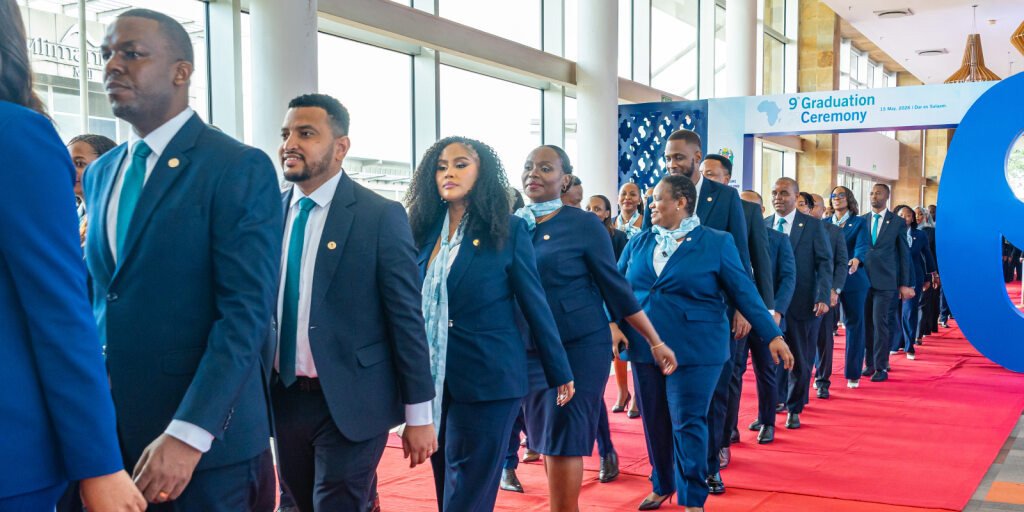
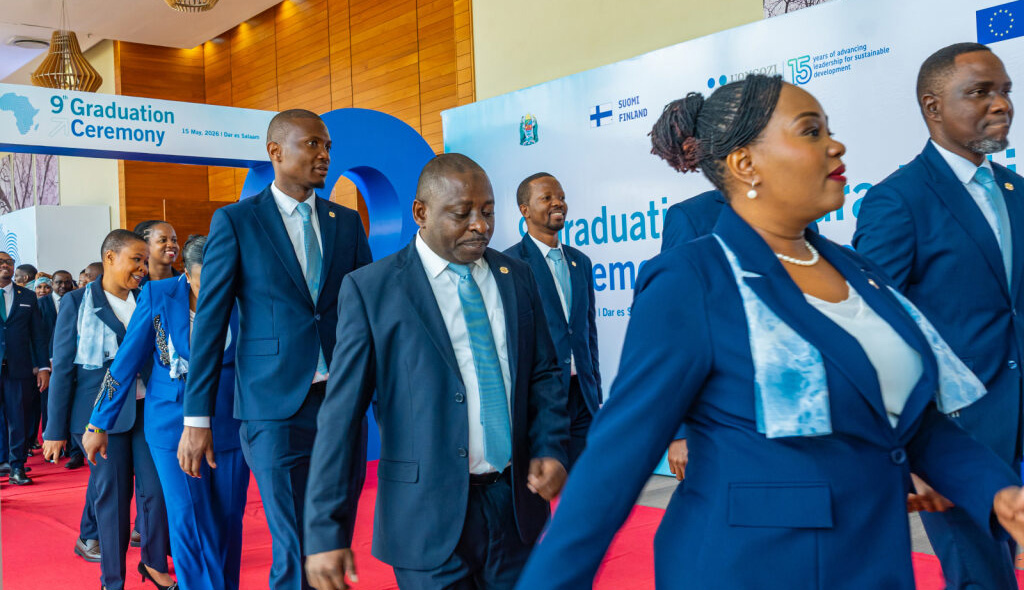
The UONGOZI graduation is a significant event locally, underscoring the strong value placed on executive education and leadership development in Tanzania. This May, the graduation of two joint programs was celebrated: the one-year Postgraduate Diploma in LeadershipProgram and the six-month online Certificate in Leadership Program. In total, 97 participants graduated from these joint programs.
 |
|
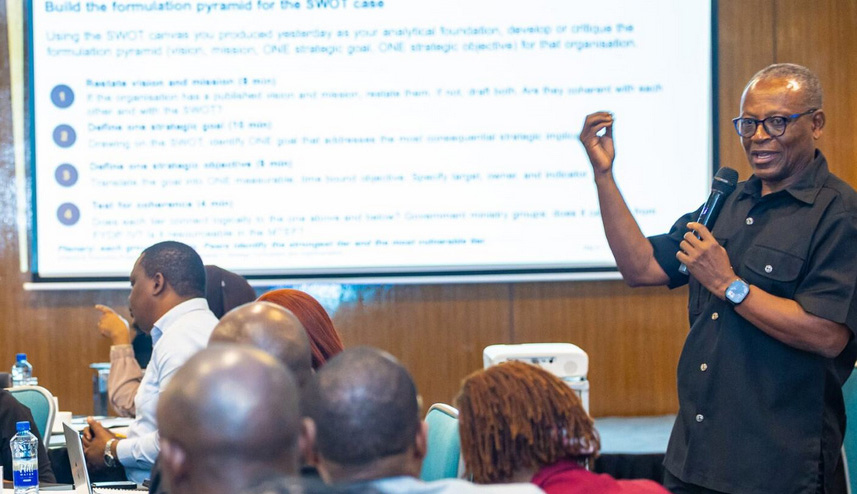
| Strategy Formulation and Implementation module was led by Daniel Chiwandamira. | |
Welcoming the 10th cohort
In addition, 39 participants were welcomed into the newest cohort of the UONGOZI Executive Program.
The participants primarily represent the public sector and government organizations, along with some leaders from the private sector. The program combines Aalto University faculty, local expertise, and international perspectives, ensuring a rich and practically relevant learning experience.
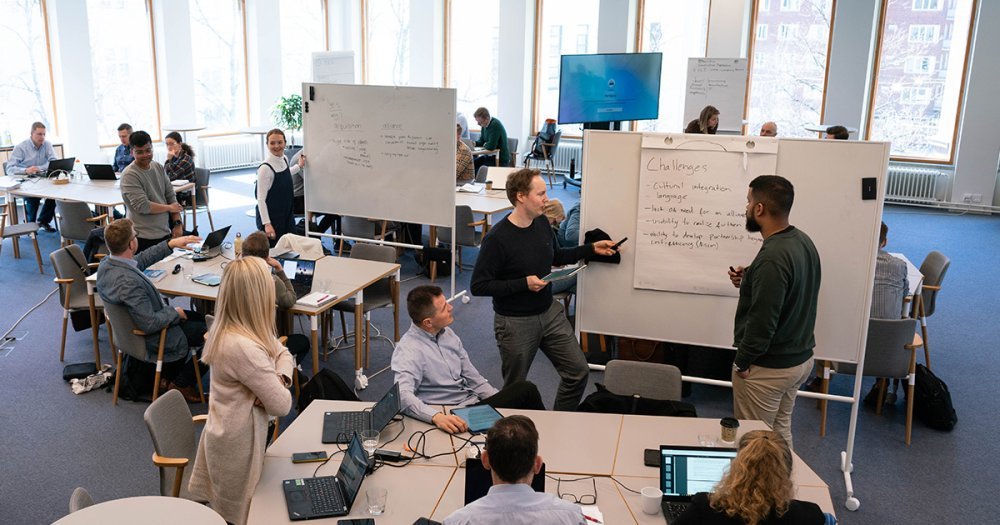
The first week of the program featured two modules designed to establish a strong foundation for the cohort. The Impactful Leadership module, delivered by Zuhura Sinare Muro, a local facilitator, provided participants with insights and practical tools for leading in their specific environments. This was complemented by the Strategy Formulation and Implementation module, led by Daniel Chiwandamira, a facilitator from South Africa, which introduced broader regional perspectives and frameworks for driving organizational performance and long-term growth.
Looking ahead
As the new cohort begins its journey, the partnership with UONGOZI Institute continues, with a shared commitment to developing leaders who can navigate complexity, drive innovation, and contribute to sustainable development in their organizations and in Tanzanian society. The program stands as a strong example of what long-term collaboration and investment in leadership development can achieve.