










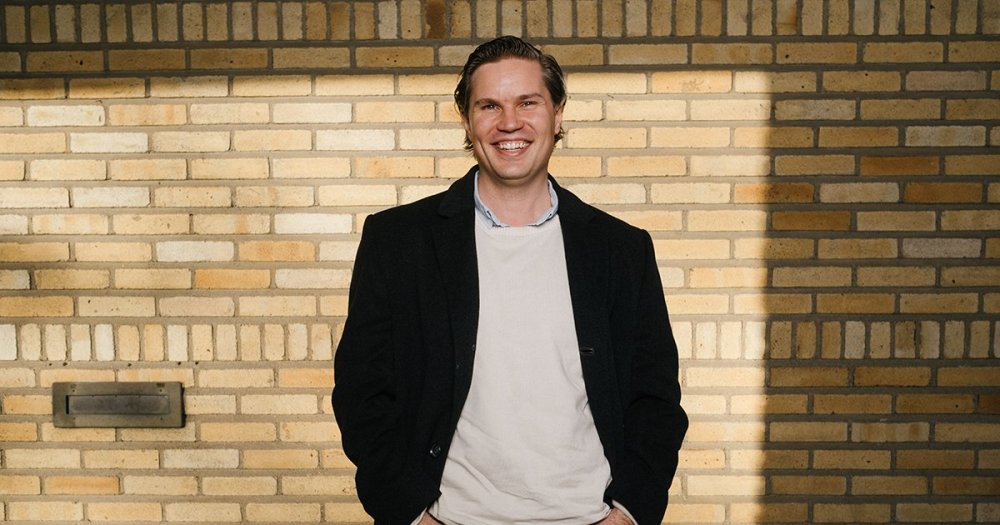



“People are complaining of the slow adoption of AI, saying we should catch up with the US or China. That type of talk doesn’t encourage people to use AI if there isn’t enough training available.”
Those are the words of AI expert Anna-Riikka Smolander, reminding that an AI course won’t be much use if the person doesn’t understand how AI relates to their work and what it even is in the first place. Understanding AI is clouded by emotions: fear, uncertainty, past negative experiences, and shame.
If you’re scared or insecure, it’s very difficult to become enthusiastic and curious.
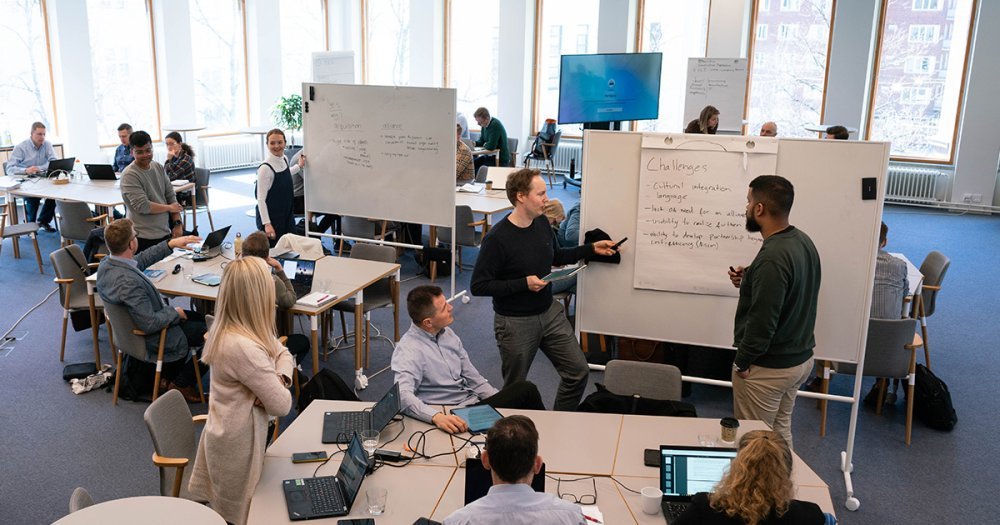
AI training should encourage experimentation. Learners need to feel free to make mistakes, try things out, and discover for themselves how AI can assist in their work.
“People are complaining of the slow adoption of AI, saying we should catch up with the US or China. That type of talk doesn’t encourage people to use AI."
A sign of successful AI training is a sense of calm: “Ah, this is my thing after all, I just need some practice.”
Smolander talks about achieving agency. A humane way to use AI begins with the person being in charge, not the machine.
Smolander has been involved in designing the Aalto EE online course A Human-Centered Approach in AI Deployment.
With a background in cognitive neuroscience, she brings insights into brain-friendly learning principles also to the AI course.
“Learning and adopting new information happens in small steps. I design courses that allow learners to progress at their own pace, giving them room for reflection and personal growth.”
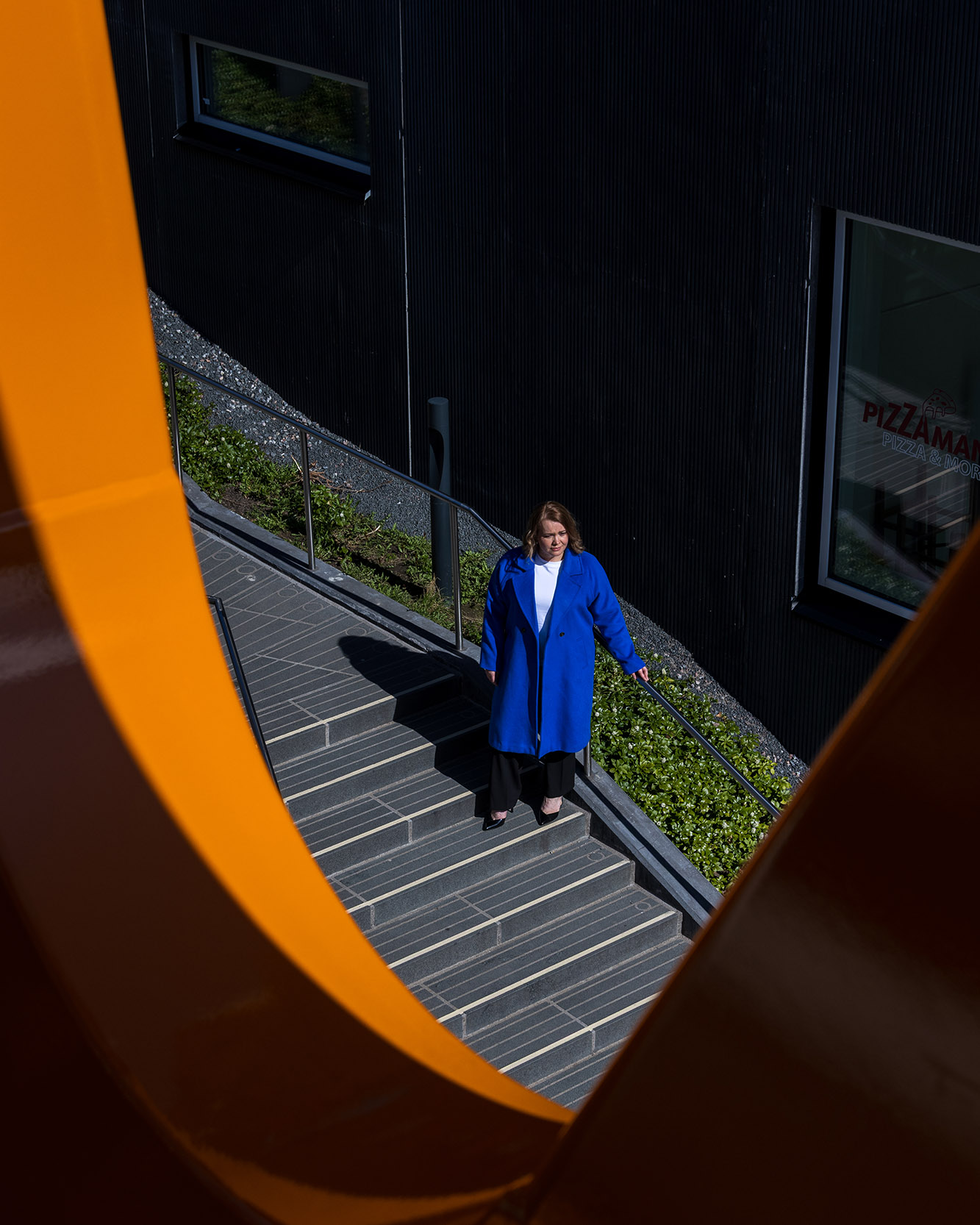
It’s easy to assume that AI only applies to knowledge work, but that’s not the case.
Smolander lists potential participants for the AI course: nurses, consultants, people working in agriculture, carpenters, and those running a cleaning business.
“Anyone working with information in one way or another.”
She continues to name areas where AI is relevant: transportation, aviation, leadership, cows… Cows?
You won’t be bringing them to a course, but according to Smolander, cows and AI are very much a match. AI can be used to improve their well-being, for instance, by optimizing their feeding or grazing.
AI makes it possible for radical innovations to come from anyone. Not just from a tech-savvy industrial engineer.
AI makes it possible for radical innovations to come from anyone, Smolander highlights.
“Not just from a tech-savvy industrial engineer who studied at Otaniemi. They could come from a farmer’s wife or a woman in India.”
Once AI becomes more prevalent across all walks of life, it brings in more diversity and a wider range of human experiences. AI can also bring innovation back to the grassroots level.
AI is often linked to lofty or alarming themes, such as DeepSeek, singularity, autonomous weapon systems, or data clouds.
Smolander believes we need ordinary people to work with AI. That means all of us, facing daily challenges that are at the core of what it means to be human: How will I be able to feed my child? How can I make sure my elderly parents get to age with dignity? How can we improve safety?
Similarly, adopting AI at work doesn’t need grand speeches from the top. What’s needed is an open discussion that takes employees’ emotions into account.
“Naturally, people will see AI as distant if there are no practical examples and experiences of its benefits.”
Artificial intelligence is not the opposite of emotional intelligence
Currently, the concept of AI is dominated by emotionally charged, at times populist rhetoric.
The antidote is a calm, research-based approach – one that fosters a sense of agency and control, instead of reinforcing preconceived ideas.
We have fundamental global challenges to solve, Smolander reminds. In many of these issues, starting with the carrying capacity of our planet, AI will play a key role in finding solutions.
AI opens the door to radical innovations. “You could think that, hang on, what if we humans built something new? What if consumption wasn’t our only guiding thought? What if our lives were rooted in humanity, not material things?”
AI gives a reason to reflect on our values, whether as individuals, organizations, or society. After all, artificial intelligence is not the opposite of emotional intelligence.