









Misinformation, disinformation, and malinformation. Artificial intelligence. A fragmented media landscape. Attempts to influence.
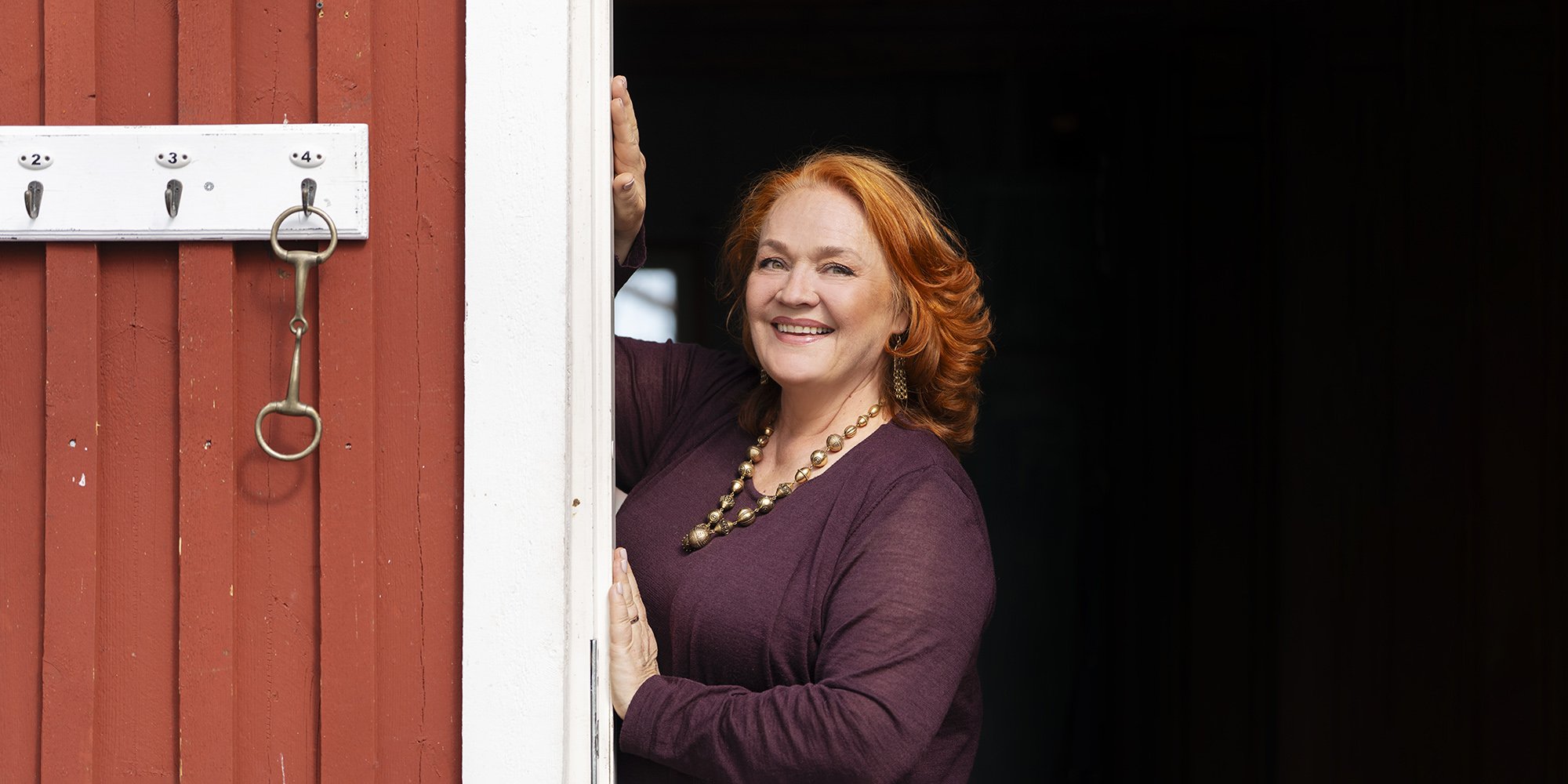
We asked leadership and communication coach Lilly Korpiola what the changed information environment means from a leadership perspective.
How should organizational leaders prepare to manage the current information environment?
"Leadership has become more demanding in a world characterized by uncertainty, constant change, and security situations that are difficult to predict. Leadership communication is no longer just about conveying information; it is increasingly about leading how people think.
In crisis situations, people’s behavior is often based on fight-, flight-, or freeze-responses, and crisis and security communication has a decisive impact on how people’s ability to act takes shape. That is why people must also be mentally aligned toward a common direction.
This is why direction, clarity, and meaning are central elements of leadership. Without a personal sense of meaning, it is hard for people to commit to a shared goal."
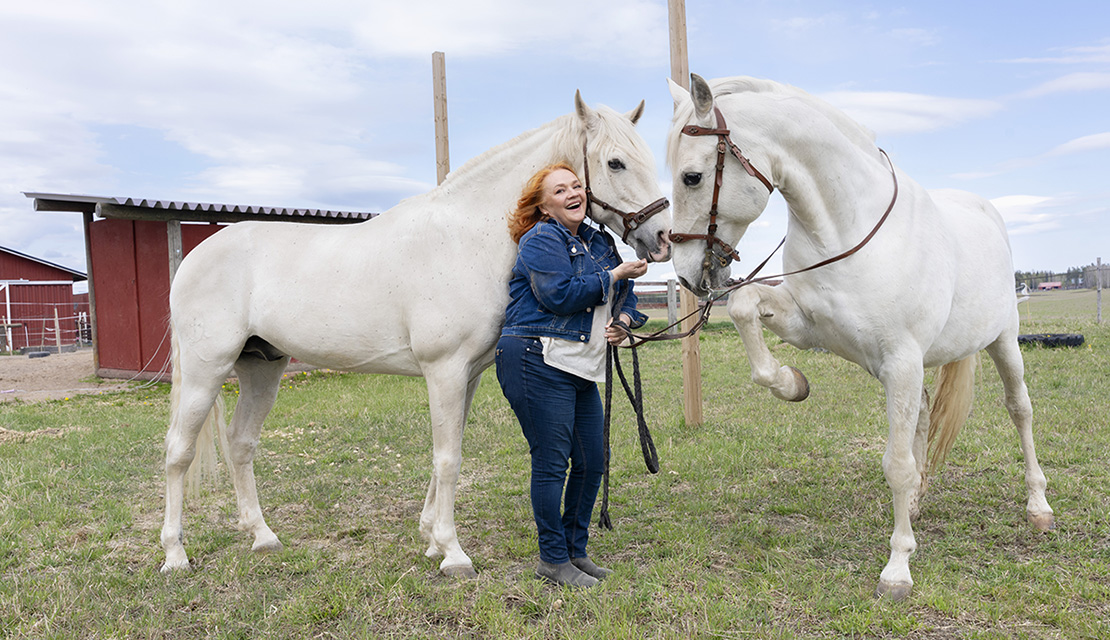 |
| Lilly Korpiola was photographed at her home farm in Loviisa, where she breeds Portuguese war horses. |
In your safety leadership training, you talk about cognitive safety leadership. Are there any tools for that?
"In leadership, it’s important to distinguish between what is fact, what is assumption, what is probable, and what the next step is. The human mind constantly strives to anticipate and update its understanding of a situation. Good leadership helps people grasp what will happen next and how they should act in a given situation.
In Finland, there are not yet any apps in use that would provide real-time warnings about drone attacks, for example. While working in the Middle East, an app provided the initial warning of a potential threat. The information was then updated with more detail: when an attack was likely to occur, where it was expected to strike, what type of threat it was, and when people should seek shelter.
"Daily life can continue even under exceptional circumstances when people’s minds are able to anticipate events and build a sense of control."
Daily life can continue even under exceptional circumstances when people’s minds are able to anticipate events and build a sense of control.
One of the most practical situational awareness apps for citizens, based on open data, even predicts whether it’s safe to take a shower. No one wants to have to run half-dressed to a civil defense shelter. It is precisely these kinds of everyday "prediction machines" and mobile applications that embody a new form of digital security thinking."
Companies employ people who operate in completely different information environments and realities. What should leaders understand about this?
"Several media generations coexist in Finland, and their relationship to information, communication, and authority has formed in very different information environments.
The oldest generations grew up at a time when information came from newspapers and the radio. The next generations embraced television, computers, and cell phones as part of their everyday lives. Since then, the world has become increasingly interconnected thanks to social media. Generation Z has spent much of its life in a state of constant visibility, and Generation Alpha is already growing up in a reality shaped by games, algorithms, and artificial intelligence.
It is not a matter of young people eventually adopting the ways of older generations. The thinking of different generations is permanently shaped by the information environment in which they have grown up.
This is also evident in the workplace, in leadership, and in security communications. People operate in parallel information environments and use different channels to receive information. One person prefers to discuss things face-to-face, another waits for a message on WhatsApp, and a third follows the situation through social media platforms.
"It is not a matter of young people eventually adopting the ways of older generations. The thinking of different generations is permanently shaped by the information environment in which they have grown up."
Even as environments change, people's basic needs remain the same. Everyone needs to feel seen and heard, to be able to influence their own situation, to feel competent enough, and to belong to a community.
The next major transformation will be related to the AI economy. In the future, some of our “coworkers” in the workplace may be bots, digital assistants, or AI-based functions. That is why organizations must learn to think and make decisions in collaboration with AI.”
|
|
| The way different generations think is permanently shaped by the information environment in which they have grown up. Korpiola notes, however, that people’s basic needs have nevertheless remained the same, regardless of generation or environment. |

What will all this look like in five years?
"Finland has long been built on a foundation of strong trust, but in the future, this trust will be put to the test in increasingly complex information environments.
We already encounter disinformation, defined as deliberately spread false information; misinformation, or information shared carelessly or without verification; and malinformation, in which factual information is used in a harmful or manipulative context. Malinformation is often the most difficult phenomenon to identify because it draws on factual information while framing it in a hostile or misleading manner.
That is why media literacy alone is no longer enough. We also need the ability to understand how algorithms work, recognize AI-generated content, and assess how information is used to influence people’s perceptions. This poses a whole new set of challenges for reputation management, both for organizations and individuals.
"Artificial intelligence is rapidly transforming the information landscape. Vast amounts of content can be produced efficiently and convincingly."
Artificial intelligence is changing the information environment rapidly. Vast amounts of content can be produced efficiently and convincingly, making it difficult to distinguish genuine and reliable communication from artificial content. A key question for companies is how to build authentic and trust-building interactions with stakeholders.
Organizational risks continue to be linked to, for example, phishing attempts and influence operations, but at the same time, the operating environment is becoming increasingly fragmented and difficult to manage. What makes risk management challenging is that attackers operate creatively, and artificial intelligence rapidly generates new operating models and threat scenarios. Simple or permanent solutions no longer exist.
In my own research and training work, I view risk first and foremost as an opportunity. Risk is not just a threat; it guides organizations to develop their operations, strengthen their resilience, and make conscious strategic choices."
 |
| Riding and horses are a way of life for Lilly. After a ride, she might make coffee at the stable or enjoy a drink, Portuguese-style. |
What new leadership roles or capabilities should organizations consider for the future?
"One of the key executive roles of the future could be the Chief Trust & AI Officer, who combines technology, business, security, and people management. Their role is to ensure that the organization is able to leverage artificial intelligence strategically, securely, and in a way that strengthens strategic trust.
The role requires an understanding of data, algorithms, and AI's impact on decision-making and business development, but also the ability to assess risks in the information environment, human behavior, and the organization's resilience. A Chief Trust & AI Officer would lead not only technology, but also how people learn to work together with artificial intelligence in a rapidly changing world."