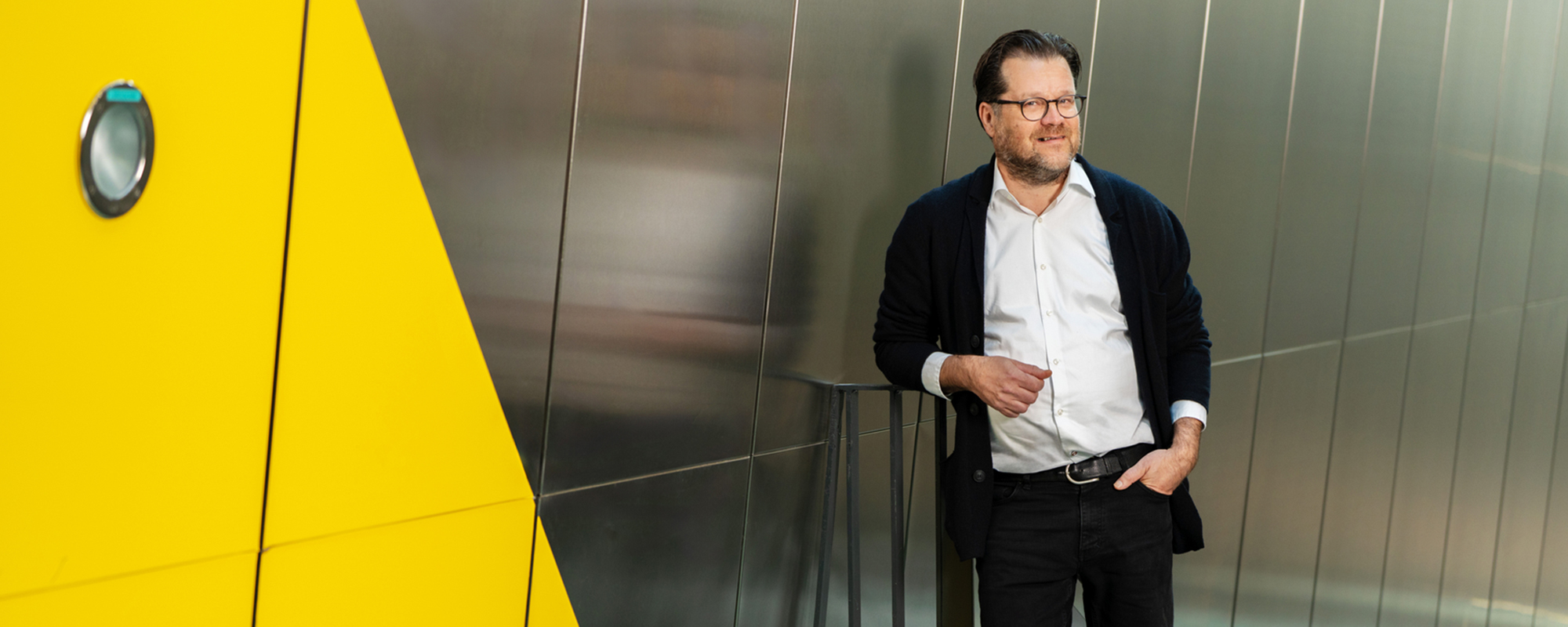








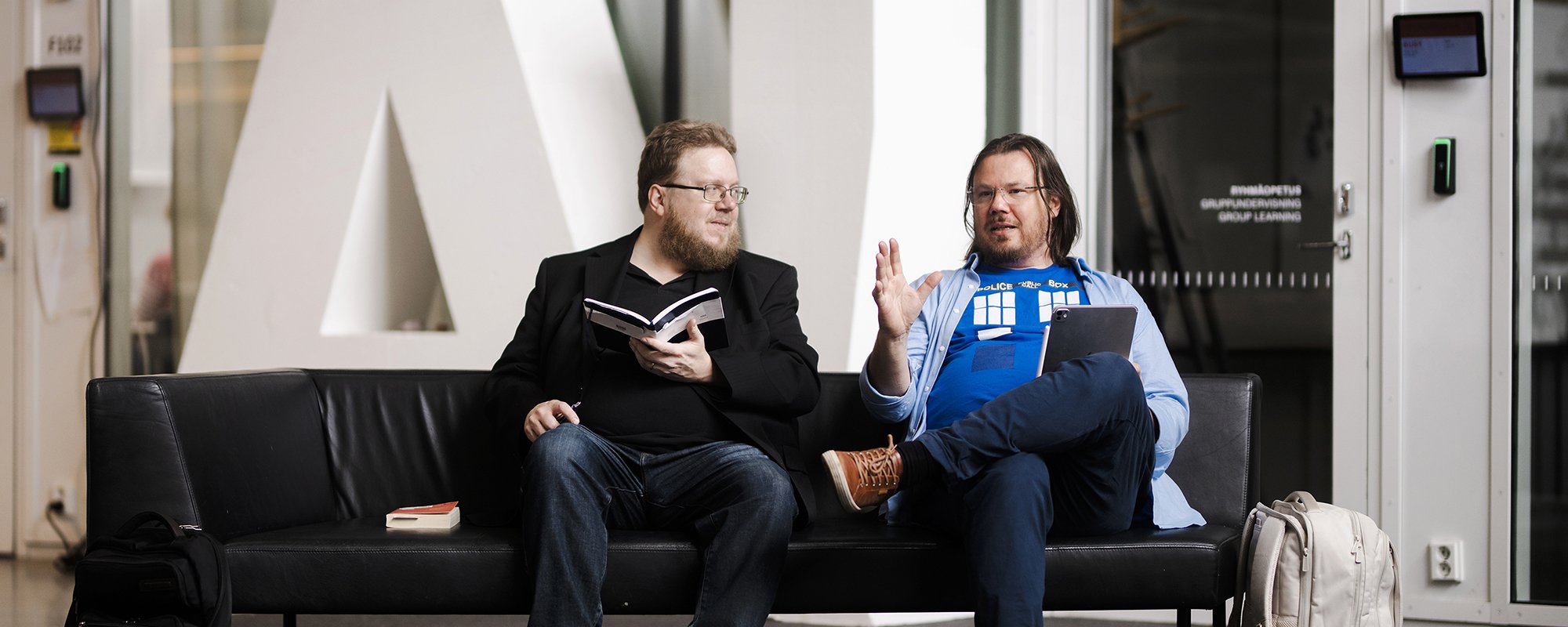
"Some people form emotional bonds with chatbots," says Janne Lindqvist.
He is an associate professor of computer science and leads the engineering psychology major at Aalto University. He studies how technology affects people's everyday lives.
ChatGPT and other large language model-based chatbots resemble human conversation so well that some people consider them as their friends, Lindqvist says.
"Because they are trained with tons of text written by people, their chats seem human-like. In online forums, for example, some people ask whether it's okay to have strong feelings for a chatbot."
Yet a language model has no consciousness, and it doesn't think or feel anything on its own, Lindqvist points out.
"It simply predicts, based on a vast body of text, which word is likely to come next. And it does that astonishingly well."
Dealing with people is far more complex because every person has their own wishes, needs, and a life story. That is why human relationships have risks: you may be disappointed or get rejected, and have to deal with difficult emotions.
"You learn to get along with people by being with them. Any genuine connection with another person is also a unique opportunity. We are mortal, and at any moment, the other person or we ourselves may be gone."
”You learn to get along with people by being with them. Any genuine connection with another person is also a unique opportunity.”
AI and automation have removed much of the friction from everyday life. In response, some people now talk about deliberately adding friction back. The idea is that life can start to feel meaningless if everything happens too quickly and effortlessly.
"And if you never do the, sometimes unpleasant, work of really thinking, you don't learn. You can think of the brain as a muscle that rots if you don't use it."
What matters in learning is giving your brain a workout, getting frustrated now and then, and then sleeping on it so the brain can process the day's events and what you studied, Lindqvist says.
He, too, wanted new challenges, and some time ago he started learning to play the drums.
"Sometimes it's really frustrating, because coordinating four limbs isn't easy at all. But the journey of learning fascinates me. It's very rewarding when you can play something that sounds like music rather than just banging."
|
|
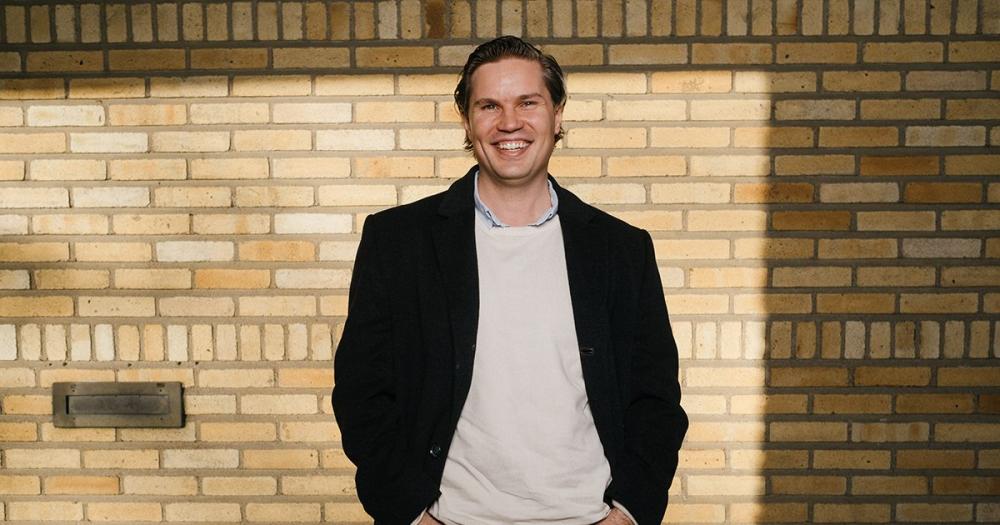
| Janne Lindqvist says the brain can be thought of as a muscle that rots if you don't use it. To challenge himself, Lindqvist started learning to play the drums. |
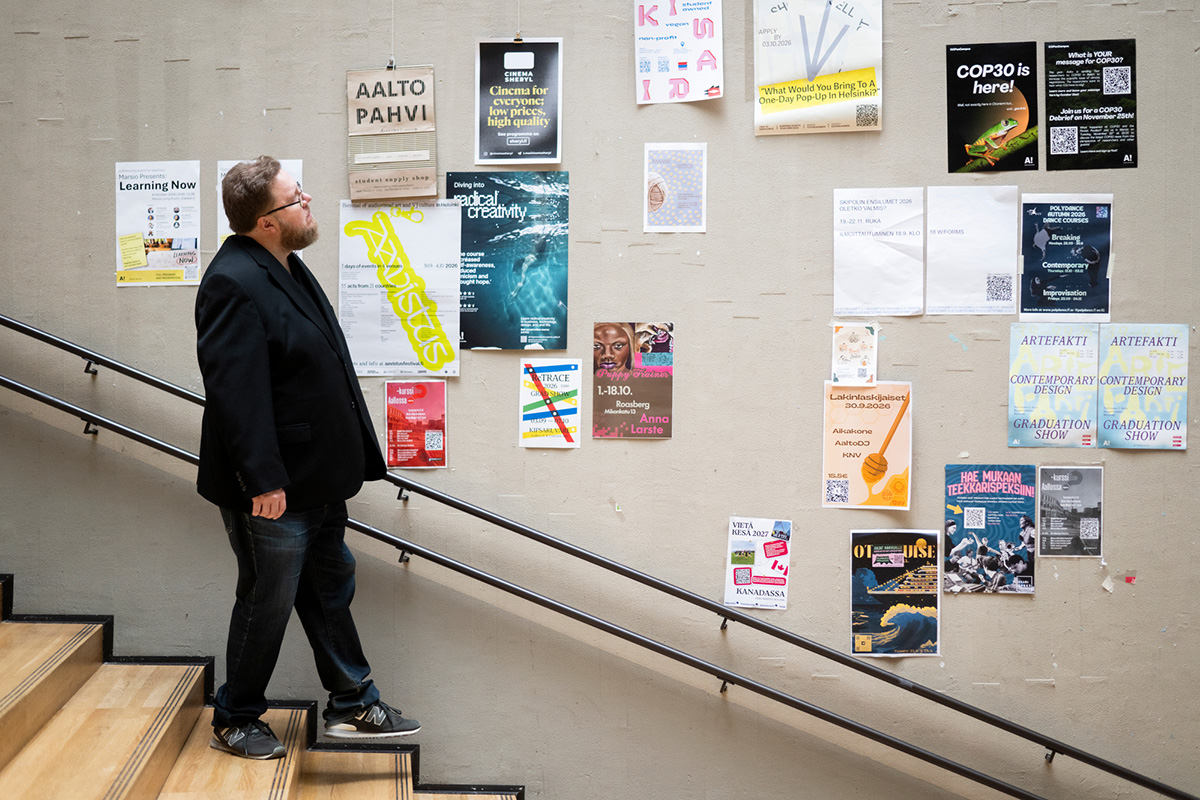
AI may, in fact, lead many people to recognize the value of human effort. If a machine can produce flawless text, images, and music in an instant, attention may shift from the result to the process of making it. How a person has worked on a piece or product also adds a certain human value to the result.
Lindqvist says he has, for example, bought handmade wooden ladles, even though they cost more than factory-made ones, because he finds them so aesthetically satisfying. He also wants to see human effort in the performing arts.
"We may appreciate AI-generated digital effects in movies, for example. But on a theater or festival stage, we want to see people, not robots. Except maybe as a curiosity."
Robots that closely resemble humans don't draw us in, either. On the contrary, they often feel creepy. According to Lindqvist, this aversion to something familiar yet somehow off is known as the uncanny valley.
The phenomenon shows that human likeness doesn't come from appearance or language alone. Interaction between people is far more holistic.
The uncanny valley phenomenon shows that human likeness doesn't come from appearance or language alone. Interaction between people is far more holistic.
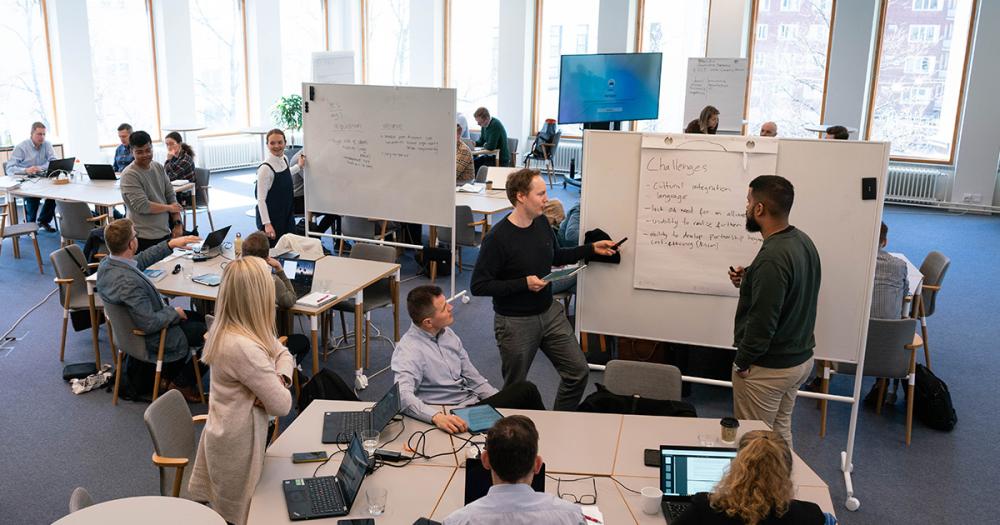
When remote work became widespread during the COVID-19 pandemic, many companies noticed how much was lost when people met only on screen. Coffee breaks and hallway conversations are where a great deal of informal information is shared, new ideas are born, and trust is built, which helps people keep going.
The same applies to learning on the job.
"Many junior-level tasks can be done very quickly with large language models. But we cannot develop new senior experts if juniors don't get to grow by doing the work and learning from seniors."
Still, Lindqvist notes that not all work helps people grow, and keeping a human in any given role is not a value.
"In many jobs, people are forced to work like they were just a part in a machine."
As an example, Lindqvist mentions the online retailer Amazon, where humans work side-by-side with robots, often performing very simple tasks with a tight schedule.
As machines take over more knowledge-based and technical tasks, a worker's advantage may lie in everything that sets humans apart from machines: physical presence, the ability to attune to others through one's whole being, and the capacity to learn from others.
"Unlike robots, we humans are social animals and part of nature, for better and for worse."
|
|
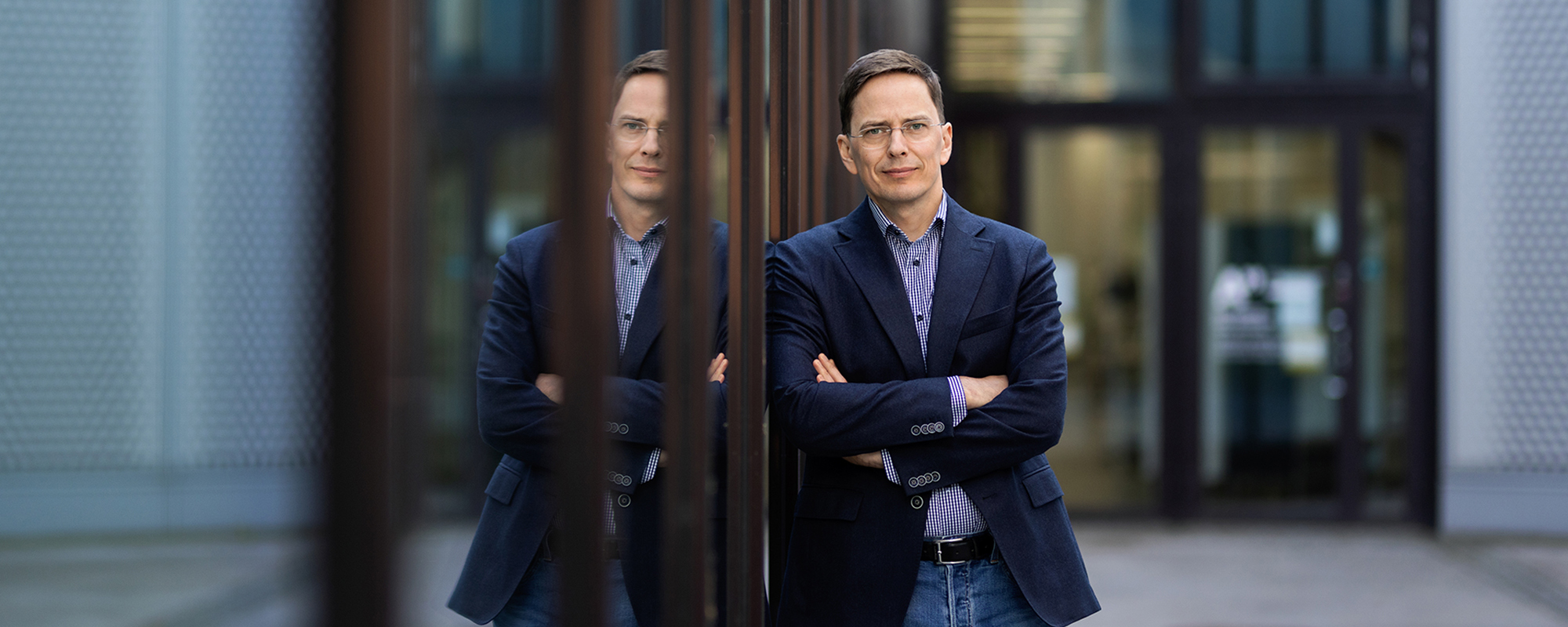
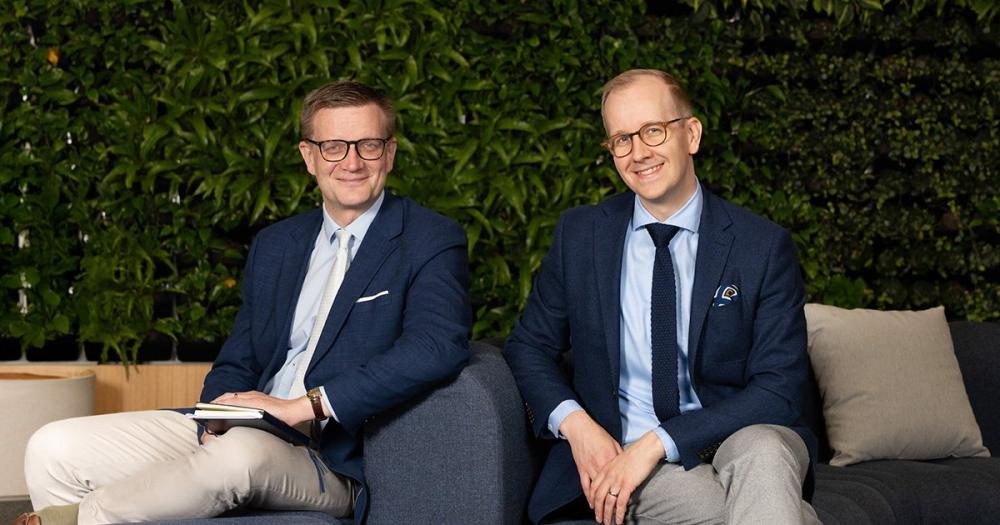
| Both Janne Lindqvist (left) and Lauri Järvilehto believe that flawless AI-produced outputs make the value of the human touch stand out. |
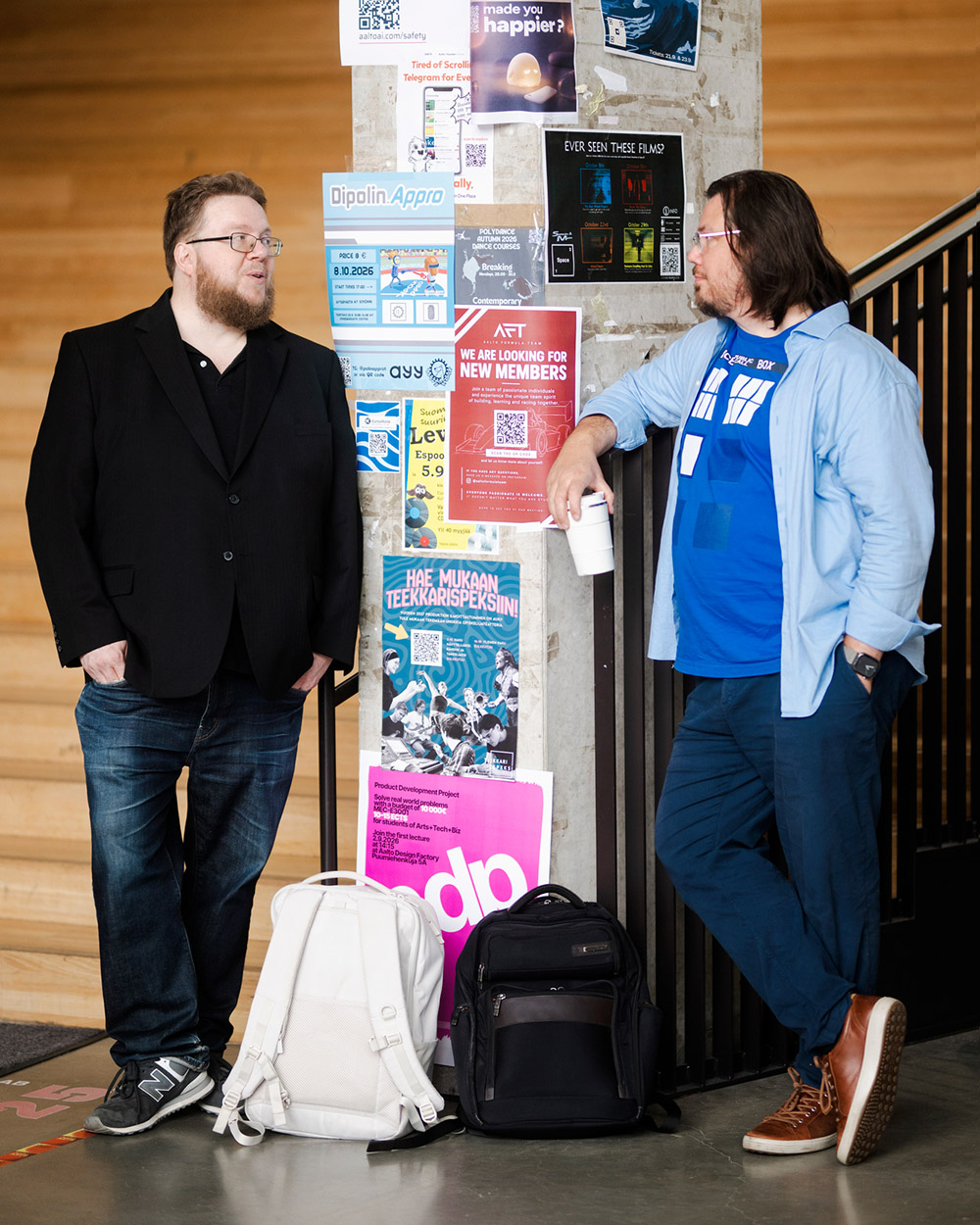
"AI makes virtuosity ordinary."
So says Lauri Järvilehto, a philosopher, nonfiction author, and corporate coach who works at Aalto University as a university lecturer and professor of practice.
New AI tools can quickly produce polished text, smooth images, and finished-sounding music. As a result, attitudes toward technical perfection are changing.
"AI has made technical excellence so commonplace that it has lost its edge. Today, the more interesting question is whether a person has something to say."
Järvilehto, a former music producer, compares the situation to earlier technological shifts in music-making. Drum machines became common in the 1980s, and Auto-Tune, which corrects vocal pitch, arrived in the late 1990s.
"When Auto-Tune can make every singer hit every note exactly, it's nice to listen to someone like Bob Dylan or Leonard Cohen, who may not always land right on the note but who have interpretive depth."
In the same way, the slick and sterile output of AI can create a longing for something more alive.
"When it's easy to make something flawless, the value of human processing stands out. A human interpretation, with its flaws and imperfections, can offer a richer experience."
”AI has made technical excellence so commonplace that it has lost its edge. Today, the more interesting question is whether a person has something to say.”
A creative tool that can be used wisely or foolishly.
That is how Järvilehto describes AI. In his view, it is a double-edged sword, much like social media, which can bring people together, turn them against each other, or lure them into endless scrolling.
"Used well, AI offers enormous potential to expand and diversify human capability. But if you let it take control, the risk is that your own creativity, thinking, and decision-making will wither."
According to Järvilehto, AI tools let people choose where to spend their time and expertise. They also open up new territory.
Järvilehto himself uses AI to illustrate his lectures and to code a prototype of a mobile game, for example, since he can't draw or code himself.
"But there's no point in handing AI the forms of expression you have a talent for yourself."
For Järvilehto, one such meaningful form of expression is music, which is why he plays every instrument on his records himself. Another is writing.
"For me, writing is an extension of thinking and a way to come up with new ideas. That's why I don't generate text with AI. I use it only for brainstorming, sparring, and fact-checking when I write my books."
Even so, he doesn't see it as a problem if someone else uses AI to produce text. There, too, what matters is how a person applies their own judgment.
If you write a simple prompt and settle for the first version AI gives you, you will probably end up with assembly-line content. The more precisely you describe your goal, the more nuanced the result can be.
|
|
| AI can be used wisely or foolishly. According to Lauri Järvilehto, what matters most is how you use it: to free up your own time and capacity, or to outsource your thinking. |

Nurturing human creativity and thinking matters at work, too, Järvilehto says.
That is why organizations shouldn't treat AI simply as a new technology that employees need to learn.
"AI means solutions that model different forms of thinking, so it is especially well-suited to growing and strengthening our capacity to think. That's why, in my view, adopting AI isn't an IT project. It's an HRD project."
HRD (human resource development) refers to the development of employees' skills and capabilities.
According to Järvilehto, traditional tool-centered training is also problematic because AI solutions are evolving so rapidly.
"In just the past nine months, for example, automation and agent solutions have advanced enormously."
”AI shouldn't be allowed to narrow the human role. Instead, it should free up time and bandwidth for more meaningful work.”
That is another reason why training should shift its focus from the features of AI tools to how people can use AI, for example, to test ideas, find new perspectives, and challenge their own thinking.
Järvilehto encourages organizations to experiment, share experiences, and learn from their peers. In an open culture, failures also become lessons.
"AI shouldn't be allowed to narrow the human role. Instead, it should free up time and bandwidth for more meaningful work."
In the end, even the value we get from AI comes down to our own unique perspective and our ability to think together with others.