







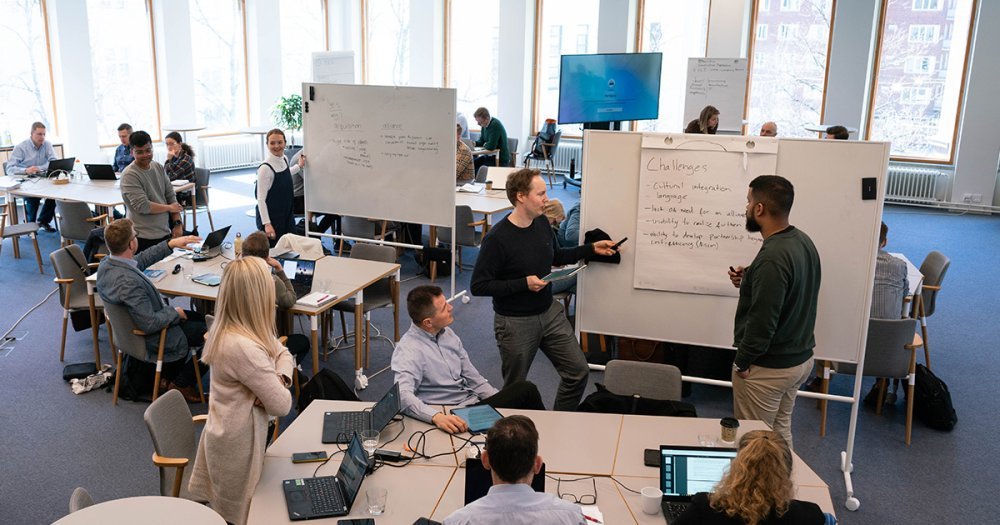






- Auditing is facing growing demands for renewal as new technologies, and geopolitical uncertainty reshape the environment in which auditors operate.
- Developments in data analytics and AI are changing how assurance is produced, while new risks and stakeholder expectations challenge the traditional boundaries of the profession.
- This article examines how these shifts influence the competence needs of auditing and how they can be developed to meet the needs of the changing profession.
Introduction
Like so many others these days, auditing is also facing significant demands for change and renewal driven by the evolving demands of organizations, technological advancements, and the increasing complexity of the global business environment. Data analytics and AI automation developments, accompanied by increasing complexity in IT infrastructures and related risks, demand advanced skills and new ways to understand risk management. The technical advancements also drive pressures for enhanced efficiency, while growing regulatory demands call for agile and scalable solutions. At the same time, stakeholders across the global spectrum expect increased accountability from auditors who are required to take broader assurance and advisor roles beyond strict compliance and performance evaluation. Furthermore, as the global environment becomes more complex, audit organizations face the need to increase global collaboration under heightened geopolitical uncertainty.
In this article, we look into the changing profession and competence needs of auditors, particularly in governmental audits and from the perspectives of technology and the changing geopolitical landscape. Since 2022, Aalto University Executive Education and Professional Development (Aalto EE) has cooperated with several audit organizations, and to understand the field, we have interviewed several professionals who work in multilateral audit organizations under the World Bank and United Nations, as well as several participants in Aalto EE’s customized training programs for the Swedish National Audit Office. Furthermore, we have interviewed selected Aalto EE faculty members and specialists from the fields of artificial intelligence and geopolitical risk.
We aim to construct a coherent view of the trends that transform the auditing profession and the competence needs that arise from the transformation. We will start by discussing the current state and change drivers in multilateral auditing organizations based on prior research and our interviews. We will then present the case of the Swedish National Audit Office – a multiyear training collaboration focusing on advancing the competencies of auditors in Data, Machine Learning, and AI as well as Design. Although the global playing field of multilateral organizations differs from the national offices, both are affected by the technological advances in the field as well as by the societal demands towards the auditing profession. Based on our findings, we will conclude the article by discussing key questions regarding the future of governmental auditing.
 |
 |
| Jason Ackerman | Ari-Matti Erjansola |
Multilateral auditing under uncertainty
Auditors serve multiple functions in the modern world. They verify the accuracy of documentation, aid in fraud detection, and mitigate corruption (Jeppesen, 2019). They enhance accountability and stakeholder trust by providing an objective view of the financials and performance of the actors, thus supporting all parties involved, including all internal and external stakeholders. (Hayes et al., 2005). The profession is thus characterized by the need for critical thinking, analytical skills, and risk management, all of which are essential in today's dynamic work environment.
Multilateral organizations are further driven by the complexities of geopolitics, which require auditors to navigate amidst cultural, political, and organizational demands. Based on our interviews, the field is characterized by varying levels of technical expertise between organizations, people, and geographical regions, and a lack of shared practices or a common understanding of how to apply them. There is a strong pressure to standardize and develop work processes and shift towards real-time assurance and advisory roles. These are driven by the demands of boards and donors who seek agile responses, as well as the current “polycrisis”, where the interplay of climate change, geopolitical conflicts, and global volatility creates both political and technical demands. The integration of Artificial Intelligence and Machine Learning into audit processes may hold the promise of enhanced efficiency and real-time insights, even as strategies for deployment remain somewhat underdeveloped.
Research (Earley, 2015; Tiberius, 2019; Munoko, 2020) has indicated that data analytics and artificial intelligence hold both promise and risk to auditing. They can, on the other hand, improve quality and enable new services and continuous auditing, but also reduce transparency. Based on our interviews, Large Language Models (LLMs) could have particular potential. Auditors often deal with large volumes of textual data, including regulatory documents and auditing reports. Furthermore, freely available media data could be utilized to gain additional information and a more in-depth understanding of the target of the audits. Already now and increasingly in the near future, this data could be analyzed both qualitatively and quantitatively, given there is standardization to ensure comparability. This may, however, be particularly challenging in crisis areas, where data can be scarce and unreliable.
Furthermore, as the field is global, auditors in multilateral organizations have always required cultural awareness and sensitivity to different cultural contexts. Today, this need has grown due to the legitimacy challenges multilateral organizations have faced in recent years. Originally founded in the post-WWII era, these organizations now operate in a different geopolitical landscape, where shifting global dynamics and increased alternatives for target countries have challenged their legitimacy in many regions. This creates a demand to understand the geopolitical context as well as the local culture. Integrating geopolitical risk considerations into auditing processes and utilizing technical solutions to monitor and understand the global and local environment would support continuous auditing and the advisory role of auditors.
While the external environment of multilateral auditing is changing rapidly, and there is an increased need to address the numerous unknown risks in an increasingly complex environment, the internal pace of change can be slow. Modern tools, advanced analysis methods, and a leadership mindset toward a culture that values innovation could enable a more dynamic, situational, and future-oriented perspective that is required in volatile environments characterized by uncertainty. Although risk management is at the core of auditing, siloed risk management practices within organizations are increasingly seen as inadequate to support the more dynamic and agile ways of operating.
Auditing is a risk management service (Knechel et al., 2020), which in the modern multilateral space is characterized by uncertainty and volatility. Technical developments promise both efficiency and standardized ways of working, while the shifts in geopolitics, accompanied by polycrisis, pose additional challenges and demand new skills. In auditing, learning is typically dynamic and practice-oriented (Westermann et al., 2014), and thus, the shift towards real-time assurance, shared practices, and increased adaptability requires a practical approach. In the next section, we will delve into how skills development was approached at the Swedish National Audit Office.
The case of The Swedish National Audit Office
Aalto EE delivered four learning programs for The Swedish National Audit Office between fall 2022 and summer 2024. The cooperation established a comprehensive and structured initiative aimed at advancing skills in Machine Learning, Artificial Intelligence, and Design Thinking. The collaboration entailed four distinct learning programs: two iterations of the Data Science Academy, the Advanced ML program, and a Design for Transformation program. The programs combined theoretical and practical perspectives, with hands-on exercises that were integrated into the daily work of auditors.
Program participants ranged from those with basic statistical knowledge to advanced professionals, including individuals from various departments and levels. The goals of the programs centered on improving the AI, ML and Design Thinking capabilities at the individual and organizational level and identifying the most relevant development opportunities in the organization. Each program was tailored to ensure practical application through project-based learning, sparring with specialists, and the creation of interdisciplinary teams to tackle real-world problems encountered in their work.
The impact of the program can be difficult to define and measure in customized programs, as they typically combine the individual and organizational perspectives. For the Swedish National Audit office, the organizational goals were to prepare and adapt to the changing technological environment, transforming the organizational culture toward more data-driven thinking, and enabling innovation in auditing practices. Furthermore, the organization aimed to strengthen it’s attractiveness as an employer and enhance its as a public-sector leader in AI adoption.
The participant perspective
Personal goals of participants generally included advancing their knowledge and skills within AI, ML, and data science, as well as adopting design thinking methodologies to enhance their work. Organizationally, the primary goals hinged on creating competences AI and data literacy, reducing uncertainty, and promoting a data-driven culture. Specific intentions involved raising standards of AI knowledge, improving collaboration, and eventually utilizing advanced technologies to audit practices and processes.
Goals were largely achieved through a combination of structured learning, hands-on projects, and supportive organizational environments, which facilitated effective transfer of knowledge. Participants noted significant growth in their understanding and application of AI, ML, and design thinking principles, with specific organizational impacts such as heightened AI literacy, increased confidence, and readiness to tackle AI advancements. Particularly, the release of technologies like ChatGPT underscored the importance of these programs, aligning them closely with rapidly evolving industry standards.
The impact of the programs was multi-faceted. On an individual level, participants experienced a tangible increase in knowledge and practical skills, leading to behavioral changes such as more proactive engagement with AI technologies and collaborative problem-solving using design thinking. Organizationally, the programs established cross-functional networks, and helped to establish standard practices. A culture of innovation and continuous learning was also developed, accompanied by application that were put to practice. This enhanced audit processes and contributed to better talent retention and attraction, despite concern of participants becoming more attractive to other employers.
Critical elements in the programs were support from organizational leadership, a conducive learning environment, interdepartmental cooperation, and the encouragement of practical application and experimentation. The importance of theoretical understanding combined with practical training and application was also emphasized. Engaging participants through clearly communicated goals, offering support structures, and supporting curiosity and openness were also important.
The participants expect the auditing profession to go through significant changes. The rise of AI and data-centric methodologies demands auditors to be analytically skilled, communicative, curious, and ethically informed. Auditors are expected to integrate AI into their processes and as the technologies become integral to audit practices, they need to advance their technical skills, critical thinking, and ability to communicate complex findings through storytelling and collaborative efforts.
Effective training programs combine subjective experiences, with effective learning outcomes that result in changes in individual behavior and finally organization level business outcomes (Kirkpatrick & Kirkpatrick, 2006). The cooperation between Aalto EE and the Swedish National Office aligned the personal targets of the participants with organizational goals through hands-on participant centered case work, that provides the skills, but also enables participants to reflect the future needs of the profession.
Discussion
Auditing faces major changes as technology becomes more integrated into the profession. Modern data analytics, ML and AI tools can improve efficiency and risk management, but their use requires new skills and ways of working. Training (Earley, 2015) as well as employees with new skill sets are required in the field to reap the benefits. Auditors come typically from an accounting, economist, or social science, background, but there is a definite need for engineers and data scientists. Additionally, auditors need to strengthen their skills in data literacy and critical thinking. Inline with the craft (Westermann et al, 2014), training programs should focus on combining theoretical knowledge with hands-on learning to ensure auditors can apply the skills to their work.
Auditors working in multilateral organizations face an increasingly complex environment due to geopolitical shifts, cultural differences, and varying levels of technical expertise. Standardizing auditing practices can improve consistency and credibility, but auditors also need to be flexible as they navigate global challenges like climate change and economic instability. Building strong professional networks is also critical, as they help to establish shared standards and a unified language that can be particularly valuable in multilateral contexts. There is heightened need to understand the geopolitical and cultural aspects of auditing, but training must also evolve to provide auditors with the necessary digital skills and data-driven approaches to help them adapt to changing conditions.
Although theoretical understanding is critical to gaining an in-depth understanding that builds confidence in one's own capabilities, training has to also include real-world application. The Swedish National Audit Office case highlights the importance of designing learning programs considering organizational goals as well as the experience, learning outcomes, and practical skills of the participants. Support from leadership and collaboration across departments play a key role in making training initiatives successful. In this case, training was also to not only develop internal capabilities but also attract new talent with the needed skills. By integrating digital learning with hands-on experience, organizations can ensure auditors are well-prepared for emerging challenges while maintaining core professional competencies.
The auditing profession is shifting toward real-time assurance and advisory roles, requiring auditors to continuously develop their analytical, technical, and communication skills. They must be able to interpret data, critically evaluate results, and clearly present findings to stakeholders. Ethical awareness and regulatory expertise remain vital as AI becomes a bigger part of auditing. To stay relevant, auditors must balance technological advancements with traditional skills, ensuring they uphold transparency, trust, and professional integrity in an evolving landscape.
References:
Earley, C. (2015). Data analytics in auditing: Opportunities and challenges. Business Horizons, 58, 493–500.
Hayes, R., Dassen R., Schilder, A., and Wallage, P. (2005). Principles of Auditing. An Introduction to
International Standards of Auditing. (2nd ed), Harlow: Pearson Prentice Hall.
Jeppesen, K. (2019). The role of auditing in the fight against corruption. The British Accounting Review, 51, 100798.
Kirkpatrick, D., & Kirkpatrick, J. (2006). Evaluating training programs: The four levels. Berrett-Koehler Publishers: Oakland, US.
Knechel, W.K., Thomas, E. & Driskill, M. (2019). Understanding financial auditing from a service perspective. Accounting, Organizations and Society, 81, 101080.
Munoko, I., Brown-Liburd, H. & Vasarhelyi, M. (2020). The Ethical Implications of Using Artificial Intelligence in Auditing. Journal of Business Ethics, 167, 209–234.
Tiberius, V. & Hirth, S. (2019). Impacts of digitization on auditing: A Delphi study for Germany. Journal of International Accounting, Auditing and Taxation, 37, 100288.
Westemann, K., Bedard, J. & Earley, C. (2015). Learning the “Craft” of Auditing: A Dynamic View of Auditors’ On-the-Job Learning. Contemporary Accounting Research, 32, 864–896.
In addition to program participants at the Swedish National Office, additional selected specialists were interviewed for this article. They include Elizabeth Stephens (Geopolitical Risk Advisory), Ahti Salo (Aalto University), Lilly Korpiola (Recado Oy / University of Helsinki), Heikki Mannila (House of AI, Aalto University), Sunil Raman (UNICEF), Javier Chavarria (United Nations) and Philippe Jolly (Swedish National Audit Office).