





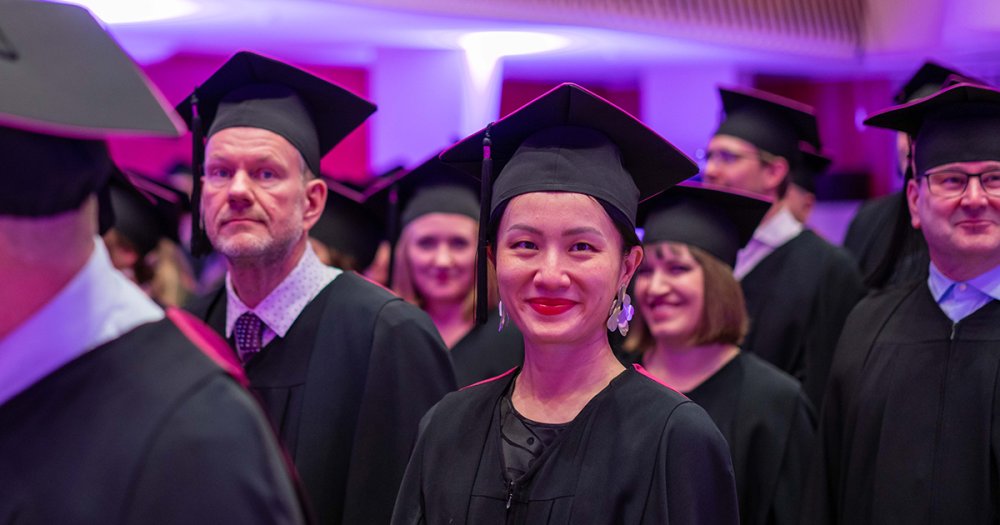
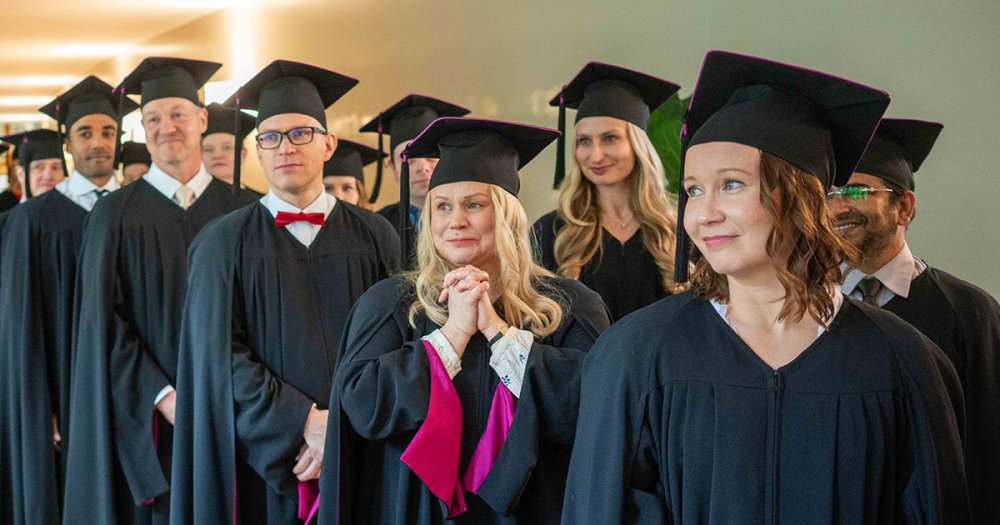









The Aalto Executive MBA has once again secured a spot among the world’s top 100 programs in the Financial Times ranking, standing out from more than 4,000 EMBA programs globally. The program has remained among the world’s elite for 20 consecutive years.
“It’s fantastic to consistently be part of the top 100 EMBA programs. Success in the ranking is a clear indicator of quality and of the development work we put into all our programs. It also shows that we are a globally respected player, capable of thriving in tough international competition,” says Kati Illikainen, who has worked extensively with MBA programs.
In the latest EMBA ranking in 2025, Aalto EMBA placed 92nd. The ranking is based on a survey answered by graduates who completed the program three years ago and statistical data provided by the schools. Institutions can participate in the ranking if they have offered an EMBA program for at least four years.
Aalto University’s multidisciplinarity is a strength
Aalto EE has systematically developed its EMBA program over the years to meet the changing needs of companies and participants. The program has introduced new, important content and perspectives. Cross-cutting themes include sustainability, new technologies, and artificial intelligence. These are also reflected in the selection of elective modules.
Compared to other universities offering MBA programs, Aalto’s strength lies in its multidisciplinarity, which spans business, technology, and the arts. This enables diverse, innovative, and comprehensive content in our EMBA programs,” says Illikainen.
The Financial Times ranking includes various criteria, such as sustainability and the proportion of women participants and staff. In the most recent Aalto EMBA group, women are in the majority for the first time. One of the most heavily weighted criteria in the rankings is salary and career progression.
Professor of Finance Vesa Puttonen, who has taught in the Aalto EMBA programs for 20 years, notes that in many countries, such as the United States, focusing solely on salary levels would be enough to secure top positions. In these countries, participants pay for their education themselves and often change jobs after graduation, using their degrees as a springboard to higher salaries.
In Finland, EMBA studies are often pursued later in one’s career. At that stage, participants’ main goals are to gain new ideas, tools, perspectives, and peer support for their work and organization, rather than focusing on personal career advancement.
“In Finland, the employer often pays for the education, and in return, the employee commits to staying with the employer for at least a couple of years after graduation,” Puttonen notes.
Participants raise the bar
Aalto EE earns points in rankings from participants’ long work experience. Sharing one’s own expertise and experiences is also central to the modules. Participants themselves make the discussions high-level, engaging, and educational.
“The diverse work experiences of participants add an important flavor to the modules. Often, participants have firsthand experience with the topic or the case companies being discussed,” says Puttonen.
Life outside the classroom often provides the best learning opportunities. In March 2020, stock and bond markets collapsed due to COVID-19 during the very same week the Finance module was held.
“We addressed the changing conditions in the course almost in real time.”
Market conditions have changed significantly over the past 20 years. For example, Europe’s many years of negative interest rates also offered an interesting basis for discussion on whether the cost of financing can be negative.
Puttonen and Professor of Management Nina Granqvist appreciate the participants’ strong commitment to their studies.
“The participants’ dedication and high-level discussions make every meeting meaningful. It’s always a pleasure to attend the modules,” they state.
Collaboration creates the customer experience
Nina Granqvist notes that rankings do not directly affect teaching. However, participants’ choices and motivation may reflect the fact that they have selected Finland’s best and a globally top-tier EMBA program.
Granqvist also praises the other staff members who make everyday operations smooth.
“There’s a strong sense of high-level service here. The teaching is extensive and of high quality, but other professionals also curate and support the learning experience. This allows everyone to focus on what truly matters,” Granqvist says.
Puttonen also commends the working environment.
“The program team takes ownership of the program and its smooth delivery. I believe that teachers’ satisfaction is visible to the students as well,” Puttonen adds.
Illikainen reminds us that customer experience is everyone’s responsibility. It starts with a genuine desire to deliver high-quality and impactful learning experiences. Good processes, continuous feedback collection, mutual trust, and natural collaboration with clients and professors form the foundation for strong customer satisfaction.
“We stick firmly to the academic quality and requirements of the programs, but as a large and versatile education provider, we can always flexibly accommodate participants’ individual needs and learning goals,” Illikainen says.