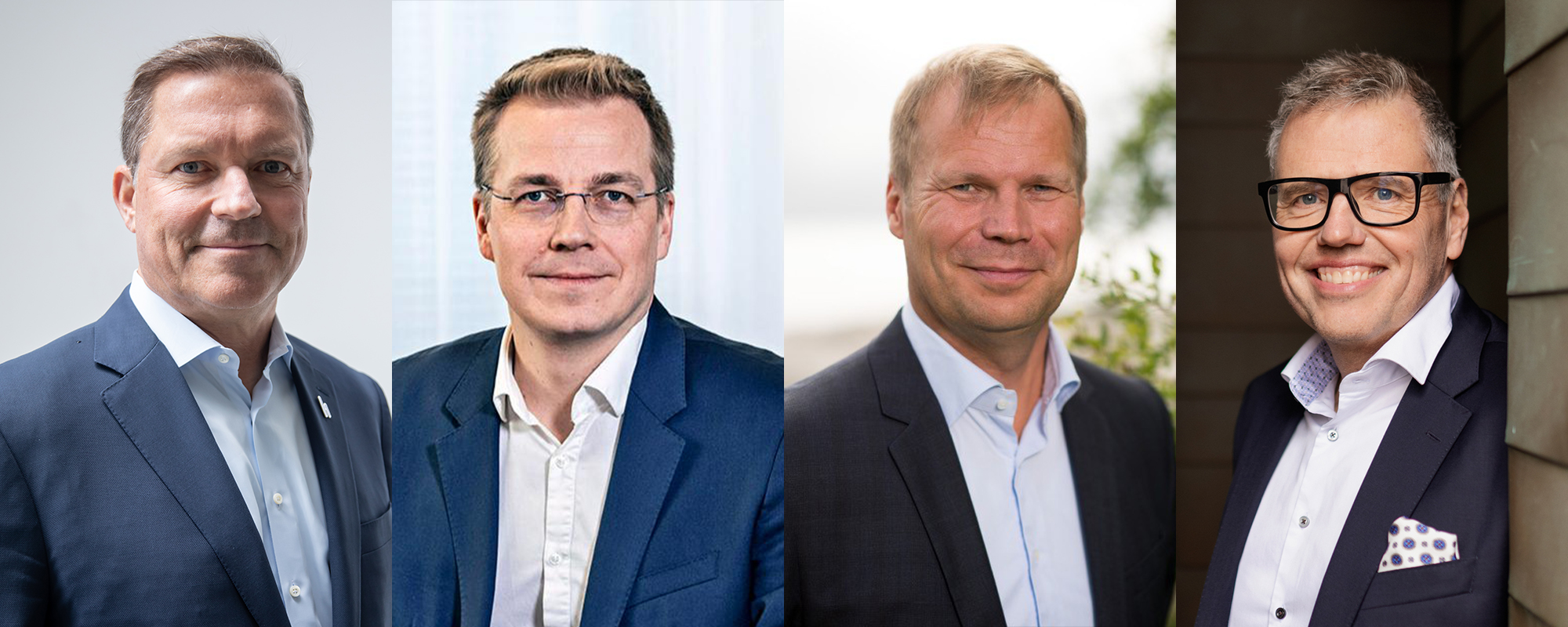






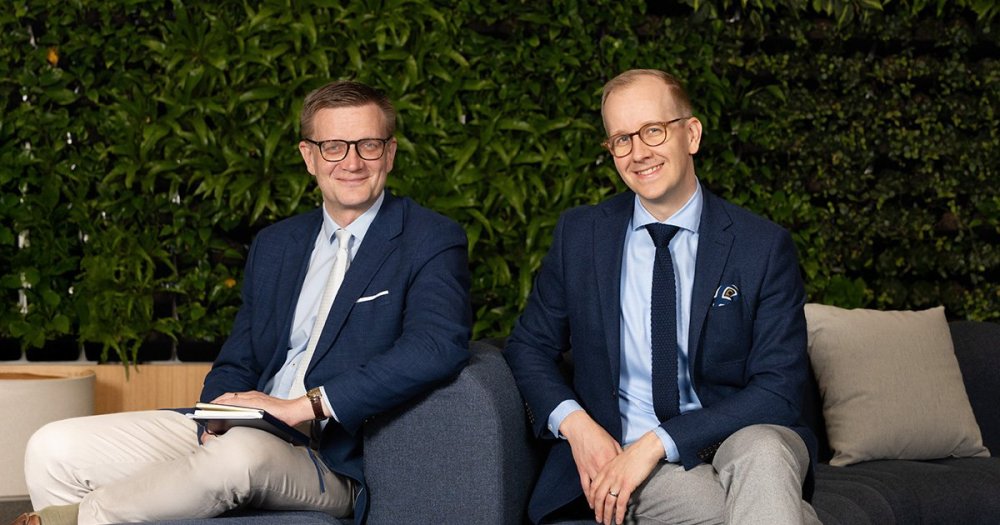



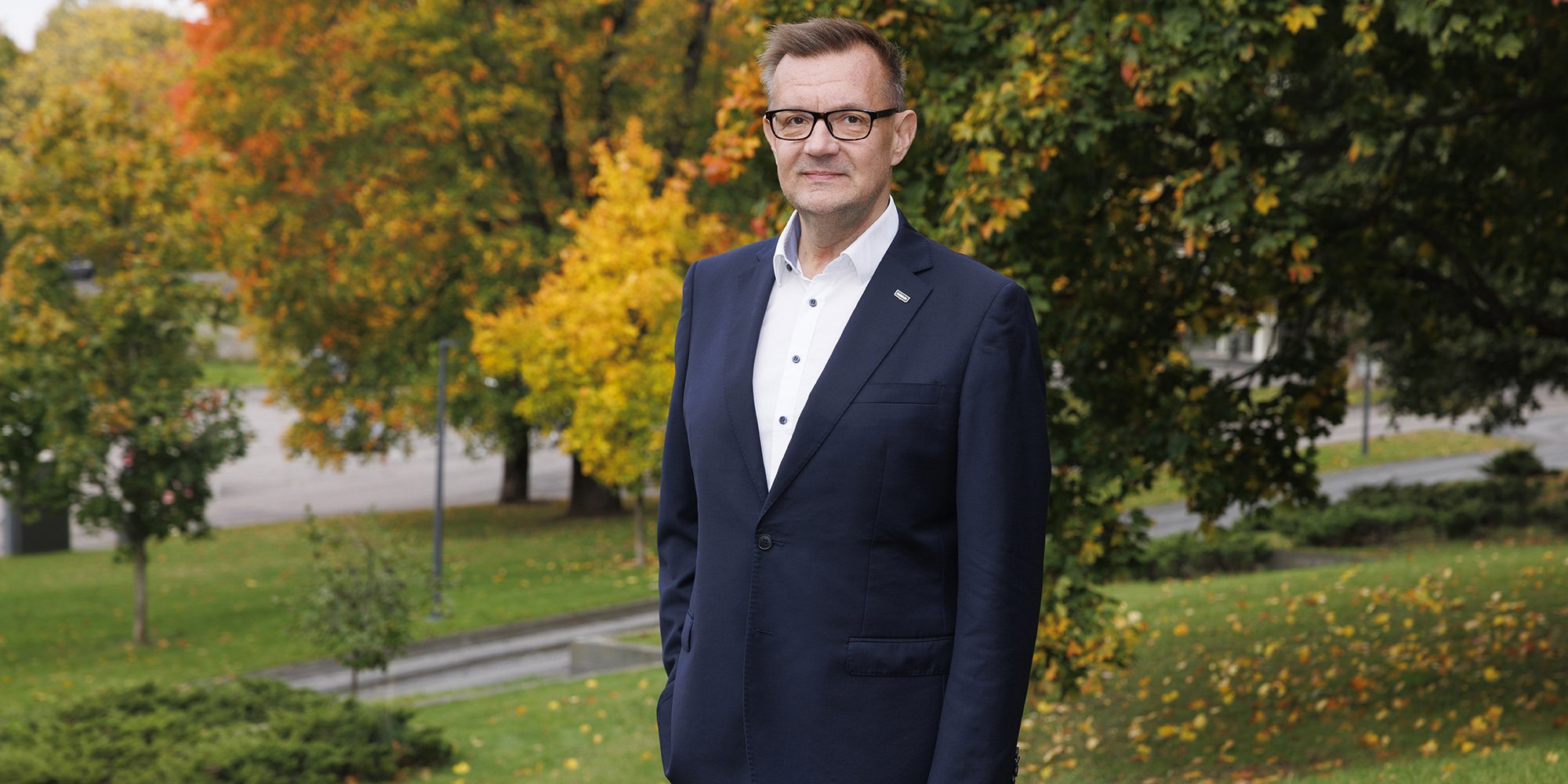
- Juha Jolkkonen has been named Aalto EE’s Alum of the Year 2025.
- His career as a specialist in geriatrics laid the foundation for his transition into leadership roles in social and healthcare services.
- A consistent theme throughout his career is the desire to make an impact—not politically, but professionally.
Juha Jolkkonen, Executive Director for the Social Services, Health Care, and Rescue Services Division at the City of Helsinki, has had a long and diverse career both as a physician and as a leader. Even an experienced leader was taken by surprise during the COVID-19 pandemic. In spring 2020, a special unit for contact tracing was established at Jolkkonen’s office in the Kallio administrative building. Suddenly, a team of fewer than ten people had to be scaled into a 700-person operation.
” We had no prior experience in scaling such a large entity on such a tight schedule, even though a pandemic plan was in place. No one had anticipated that we’d need to multiply our resources by a hundred," Jolkkonen explains, adding that a group of professionals quickly sprang into action across departmental boundaries. Eventually, even some members of the Helsinki Philharmonic Orchestra were involved in contact tracing.
"It was impressive work and a great example of how leadership must adapt to the times and circumstances. Back then, we shifted quickly to a clear and more direct line management approach. The firm's leadership style was appreciated at the time. Later, we returned to a more coaching-oriented leadership style, which is better suited to normal conditions."
The pandemic and the measures it required are just one example of how Jolkkonen’s leadership skills have been tested over the years.
"No one can claim to be just one type of leader, because styles and needs vary depending on the situation. And while leadership can often be a lonely role, it’s also about collaboration and continuous teamwork," says Juha Jolkkonen.
Encounters are the foundation of leadership work
At heart, the Alum of the Year describes himself as a social and healthcare professional. His career path is long and impressive: as a specialist in geriatrics, he worked extensively with various patient groups and multidisciplinary teams. Over the years, he became familiar with internal medicine, pulmonology, neurology, and psychiatry. He has worked in maternity clinics and health centers, made home visits to the elderly, served in emergency care, and worked in care units. This hands-on experience gave him a broad perspective on social and healthcare services.
"I never wanted to specialize in a narrow field. The skill of encountering people develops when you see the full spectrum of life and meet a lot of people with different situations and needs. That has also been a solid foundation for leadership," Jolkkonen says.
Leadership and development roles entered the picture early on—driven by a desire to make a practical impact.
"I’ve never been a full-time developer. I’ve always combined clinical work, supervisory roles, leadership, and service reform."
"I’ve started new services, discontinued old ones, and always aimed to improve based on the needs I’ve identified."
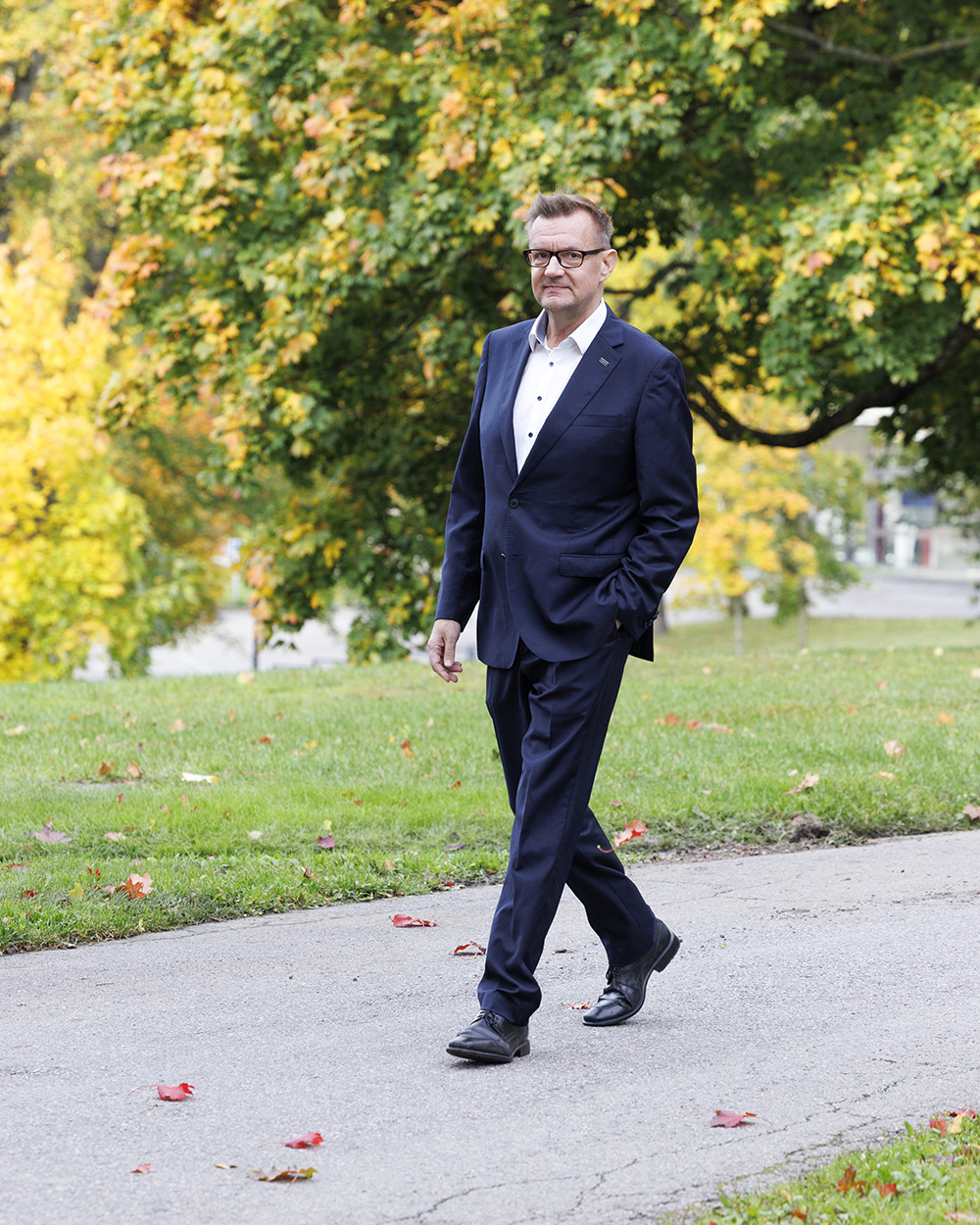
A desire to make an impact through professional expertise and leadership
Juha Jolkkonen has been in leadership roles for a long time. A brief stint in the pharmaceutical industry helped strengthen his business management skills. While working at Novartis, he realized that a medical background is highly valued even outside clinical roles. The company genuinely appreciated the expertise of its medical professionals and systematically offered leadership training.
"That was an important phase, as it deepened my understanding of how meaningful it is when an employer invests in the development of its employees’ skills and values their professional growth."
The pharmaceutical industry could have offered Jolkkonen a lifelong career, but he chose a different path. The opportunity to return to leadership roles in public social and healthcare services—and to bring his broad experience to benefit the community—won out.
"I’ve never felt drawn to political influence, but I do want to make an impact through my professional expertise and leadership."
I do want to make an impact through my professional expertise and leadership.
Jolkkonen has been working for the City of Helsinki since 2012.
His current leadership team consists of six people: two with medical backgrounds, two with nursing backgrounds, one social services professional, and one rescue commander.
"Our backgrounds are well represented in senior leadership, but no one was selected solely because of their background. In social and healthcare services and rescue operations, a good leader is above all a competent one—but the diversity of backgrounds is definitely a strength."
EMBA studies deepened leadership expertise
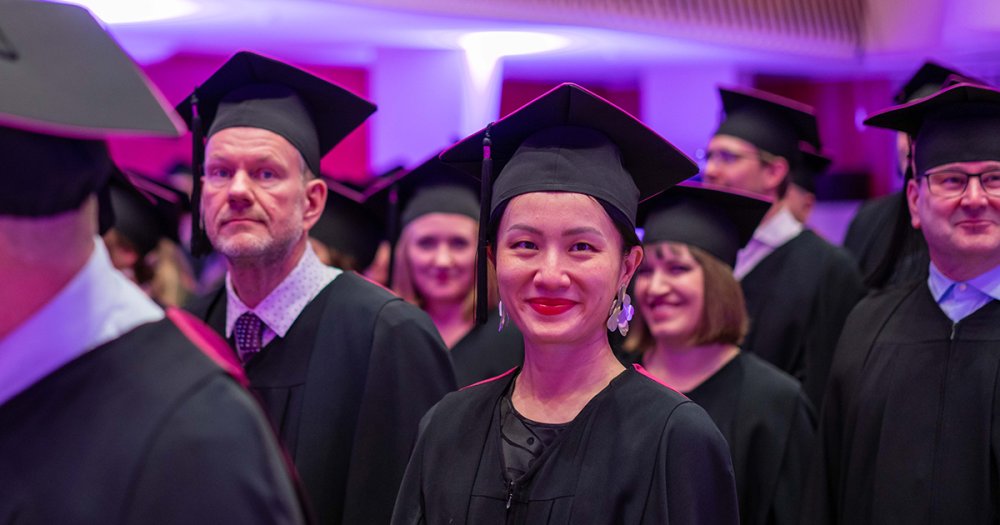
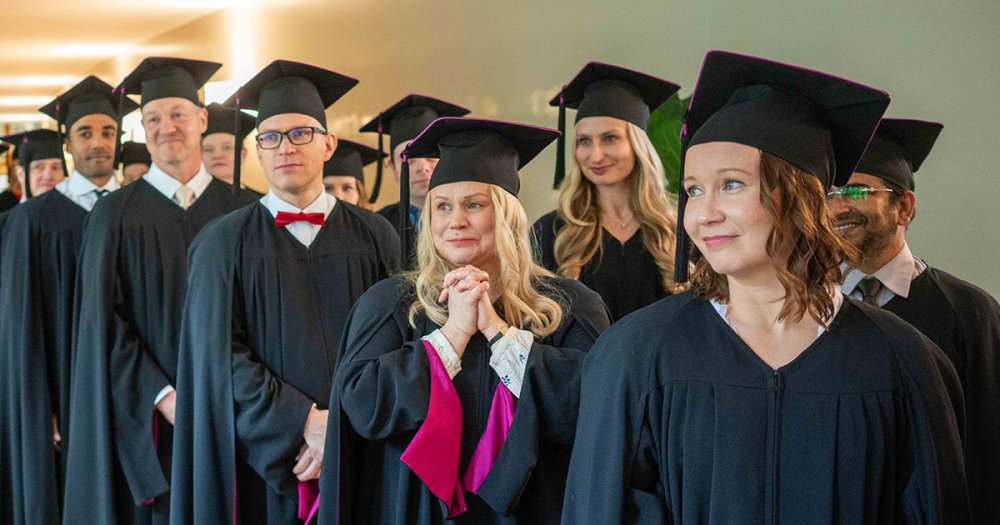
Juha Jolkkonen graduated from Aalto Executive MBA program in 2014. He considers the studies one of the key turning points in his career.
"An EMBA is not basic leadership training. It’s worth starting when you already have leadership experience and want to deepen your expertise further," Jolkkonen says.
In his view, the EMBA is a well-rounded program that allows each participant to gain the leadership insights they personally need most. For him, the most enlightening moments included discussions around change and change management. He also found the practical approach highly impactful.
"Managerial accounting and other purely business-oriented areas of expertise took my skills to the next level. We also covered a wide range of topics—from strategy to HR, and from communications to marketing, even branding. That’s needed in public sector leadership too, when we engage in public dialogue about our legitimacy and trust."
I believe in networking and the power of networks.
During the two-year program, the 24 fellow participants also became valuable contacts and peers, offering opportunities to reflect and scale their own leadership experience.
"I believe in networking and the power of networks. Even if five years go by, I can still call a fellow EMBA classmate anytime if needed."
Investing in competence development is non-negotiable
Even after completing his studies, Juha Jolkkonen has remained an active advocate for learning, especially in training programs for senior and middle management at the City of Helsinki. He has championed the idea that the final projects of each EMBA cohort should contribute to practical development work. The alumni network of the city’s own EMBA group continues to serve as a strong community of change agents.
"Through these programs, we’ve built a network of up to 150 agents across the city who are driving renewal forward."
He believes that, just like in any profession, continuous learning is essential—and leaders must adopt a mindset of lifelong learning.
"In a way, you constantly need to question how you operate personally or how we function as an organization. This doesn’t have to be done negatively, but rather by analyzing whether the world has changed and whether there are better ways to act."
The City of Helsinki has utilized programs such as Aalto EE’s AaltoJOKO®, as well as modules on ICT, digitalization, artificial intelligence, and preparedness and contingency planning.
"I always encourage my team members to identify their learning needs and explore offerings from selected institutions. Visionary thinking only develops by exposing yourself to new ideas."
The need to develop competence doesn’t disappear with economic cycles—it must be a permanent part of organizational operations.
Jolkkonen, who believes in coaching-oriented and encouraging leadership, emphasizes that the importance of competence development is so great that it cannot be compromised, even in tight financial times.
"Competence development is a cornerstone that should not be touched. The need to develop skills doesn’t fluctuate with the economy—it must be a permanent part of how an organization operates," Jolkkonen says.
Aalto EE’s Alum of the Year award is presented every two years. It is given to an individual who is passionate about learning and has promoted interaction between society, alumni, and Aalto EE. The recipient has made a positive impact on Finnish society and achieved exceptional accomplishments in their career.
The winner was introduced alongside other Alumni of the Year at the Aalto Alumni Weekend event on October 25, 2025.