











Executing strategy successfully is one of the greatest challenges organizations face today. While developing a strategy is essential, real value is created only when strategic ambitions are translated into everyday decisions, actions, and behaviors across the organization.
Participants in Aalto EE's Driving Strategy Execution program come from a wide range of industries and countries, but they often share similar questions: How can leaders turn strategic goals into measurable results? How can organizations align people behind change? And what causes even well-designed strategies to fail during implementation?
We spoke with two participants about their experiences in the program and the insights they are taking back to their organizations. In the interviews below, Maximilian Pfeifer of Pfeifer Group and Cees Van Veluw of Huisman reflect on strategy execution, organizational change, and the practical value of the program.
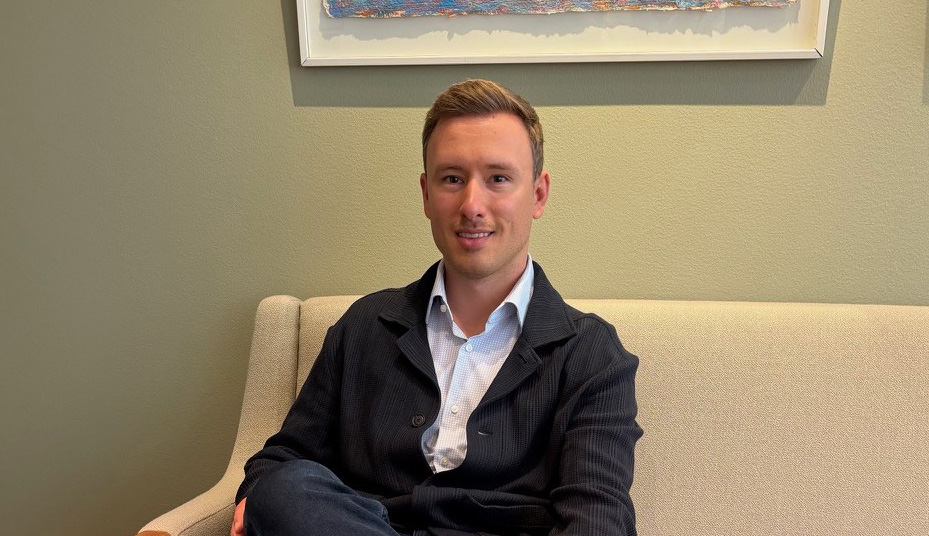
Maximilian Pfeifer, Head of Production, Pfeifer Holding GmbH
Maximilian Pfeifer is a fourth-generation representative of the family-owned Pfeifer Group and serves as Head of Production in Finland. Since January 2026, he has been responsible for the company’s production operations across five sites in Finland, overseeing manufacturing and operational performance.
What made you decide to join this program, and what were your expectations?
“First of all, the program was recommended by our Group CFO. It is also part of an internal development program specifically designed for members of my generation in the family business. The goal is to prepare us for future leadership positions within the company and support our long-term development.
What particularly attracted me to this program is that it fits very well with our company's current situation. We acquired the Finnish operations in 2023, and at the beginning, we faced several challenges. We came here thinking we could simply apply our existing way of working, but we soon realized how different the culture and working practices are in Finland.
That is why I was very happy to join this program. I wanted to learn not only about strategy in general but also about how it is developed and implemented in the Finnish context. This knowledge is highly relevant as we continue integrating the Finnish operations into the wider group.”
How has the program met your expectations? Has anything surprised you or turned out to be particularly valuable?
“What I find especially valuable is that the program is not focused solely on theory. We do a lot of practical exercises, role-plays, and simulations in which we take on different perspectives and roles.
The strategy professor does not simply lecture for hours. Instead, we actively contribute our own ideas and immediately apply them during the sessions. I think that a practical approach makes the learning much more valuable and impactful.”
Can you already identify any frameworks, tools, or insights that you plan to apply in your work?
“Yes, definitely. One of the key insights for me has been the importance of emotions in strategy implementation. I already understood that emotions matter, but I had not realized just how significant their role can be.
In our situation, we are dealing with language barriers between Central Europe and Finland, as well as cultural differences. When you are trying to integrate operations from another country into a group structure and standardize processes, emotions have a huge impact on how people respond to change and how successfully those changes can be implemented.
This realization has been extremely valuable for me and directly applicable to my work.”
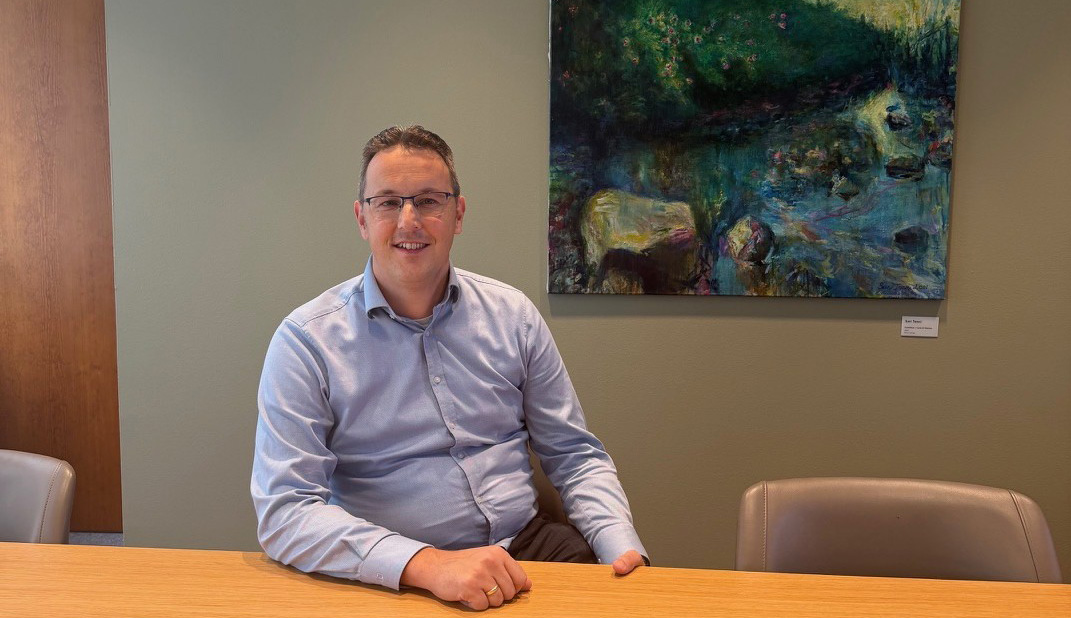
Cees Van Veluw, Business Line Director - Offshore Products & Cranes, Huisman
Cees Van Veluw leads the Offshore Products & Cranes division at Huisman. With decades of experience in tailor-made offshore equipment, Huisman is strengthening its strategic capabilities as it transitions to the next generation of leadership. To support this evolution, Cees joined the Driving Strategy Execution program to further develop strategic decision-making and help drive long-term business success.
What made you decide to join this program? How did you find it?
“Part of my role involves developing strategies and ensuring that our organization can successfully implement them after they have been approved by senior management. I wanted to improve my skills in this area and was looking for a program that would help me deepen my understanding of strategy development and implementation.
In a company like ours, where strategic decisions have traditionally been made more intuitively, you may not always have access to structured tools and methodologies for strategy execution. This open-enrolment program caught my attention because it offered exactly that: practical frameworks and tools to develop and implement a strategy more effectively. That is what motivated me to sign up.
You are based in the Netherlands, yet you chose a program in Finland. Did you also consider executive education providers closer to home?
“Helsinki may seem far away on the map, but from a travel perspective, it is actually very accessible. There is a direct flight from Amsterdam, and once you arrive, it is easy to get into the city. In that sense, it is not really any less convenient than travelling to other executive education destinations in Europe.
We also work with many partners across the Nordic region, so looking towards a Nordic country for executive education felt quite natural. In addition, I think there are some cultural similarities between Finland and the Netherlands. The Dutch are known for being direct, and while Finns may be somewhat more reserved, there is also a similar sense of straightforwardness. That made it surprisingly easy to connect with the other participants.
Another aspect was the language. I expected a very high level of English proficiency, and that was exactly what I experienced. Although many of the participants were Finnish, running the program in English worked extremely well.”
How do you plan to apply what you have learned in your work, both in the short and long term?
“We have an overall company strategy from which we derive business-specific strategies and business canvases. One of the key takeaways from the program was a set of tools and frameworks that help structure and assess those strategies more effectively.
The program also provided valuable insights into why strategies sometimes fail. One particularly interesting topic was the discussion of organizations in which senior leadership had developed a strong strategy, yet implementation failed at the middle-management level for unexpected reasons.
As a result, I believe it is important to pay closer attention to the perspectives, concerns, and emotions of middle managers when implementing strategic initiatives. By taking those factors into account from the beginning, we can significantly improve the chances of successful execution.