







Delivery mode
Self-paced online
Estimated study time: 27 hours
Location
E-learning environment
Language
English
Scope
1 ECTS
Sustainable Maritime Operations in Global Context
As global trade expands and environmental pressures intensify, the maritime sector stands at the crossroads of economic growth, technological change, and sustainability. Shipping, port operations, and maritime industries in general face the urgent challenge of reducing environmental impact while navigating complex international regulations and adapting to rapid innovation.
The Sustainable Maritime Operations in Global Context online course explores how the seas are used and governed in relation to sustainability, technology, and societal needs. It offers a broad understanding of maritime operations, including economic and technical perspectives, environmental challenges, and global trade. The course examines how the needs of the society affect the use of the seas, how societies regulate this use, how marine technology supports sustainable development, and how trends in innovation, the economy, and the environment shape the future of maritime activities.
This online course is open to learners from all backgrounds and does not require prior knowledge. It combines video lectures, reflection tasks, and quizzes to support deeper understanding and connect ideas across different contexts. Drawing from real-world examples and multiple disciplines, the course provides a flexible and accessible way to explore complex maritime themes and encourages participants to consider how the seas can be used responsibly and sustainably.


Learning Outcomes
After completing the course, you will be able to:
-
Identify how trends related to technology, economy, and the environment influence the use of the seas.
-
Describe how societal needs are connected to the use of the seas and how this is reflected in different types of operations and technical solutions, taking into account both economic and technical perspectives.
-
Explain how and why society regulates the use of the seas and related operations, considering aspects related to freedom, environmental footprint, and safety.
-
Describe how societal needs are connected to the use of the seas and explain how this is reflected in different types of operations and technical solutions, taking into account both economic and technical perspectives.
For
This course is designed for individuals who are new to maritime topics or those seeking a broader understanding of the use of the seas and sustainability. It is suitable across different sectors and does not require a technical background, making it accessible to a wide range of professionals and students.
The course is especially relevant for:
-
Logistics and supply chain specialists
-
Environmental and sustainability experts
-
Marine technology professionals
-
Public policy advisors
-
Professionals working in public and private organizations connected to maritime operations, trade, or sustainability goals
Content and Schedule
The course explores the responsible use of the seas through three main themes: The needs of society, Technology and the marine environment, and Sustainability, risks, and regulation. Video lectures cover topics such as global maritime trade, maritime economics, sustainability, operations in ice-infested waters, marine engineering, ships and offshore assets, safety and environmental impact, policy and regulation, and creativity. The content encourages learners to reflect on the nature of the use of the seas as a multifaceted combination of the needs of the society, rules set by the society and existing and future technology offering both challenges and opportunities for professionals in various disciplines.
The course videos and assignments are in English, and all videos have subtitles in English, Finnish and Swedish.
The course takes approximately 27 hours to complete and is equivalent to 1 ECTS. It consists of 22 video lectures, along with quizzes and reflection tasks that support learning.
You can complete the course at your own pace, either by spreading the content over several weeks or by following a more focused schedule. To finish the course and receive a certificate, you need to watch all videos, complete the quizzes with a minimum score of 75 percent, and submit all reflection tasks.
Instructors
Pentti Kujala
Pentti Kujala is a Professor Emeritus of Marine Technology.
He has been working on the safety of ships both in open water and in ice. His main expertise over a 40-year career has focused on full-scale measurements of ice-induced loads and analysis of ice load statistics, simulation of ship performance in ice, development of advanced structural solutions for ships, and development of system-level safety of marine traffic. He has also served as Vice Dean of the School of Engineering at Aalto University, with responsibilities related to the impact and innovation activities of the School. Kujala has extensive national and international cooperation experience, including heading the Center of Excellence for Safe Arctic Shipping funded by Lloyd’s Register Foundation in London.
Tommi Mikkola
Tommi Mikkola works as a Senior University Lecturer in fluid mechanics within the Marine and Arctic Technology group at the Department of Energy and Mechanical Engineering at Aalto University.
His research interests focus on how computational methods and high-performance computing can be applied to solve problems in ship hydrodynamics effectively and reliably. He is particularly interested in the interaction between waves and ships, including phenomena such as wave loads and added resistance caused by waves.
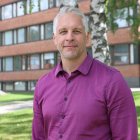
Jani Romanoff
Jani Romanoff is a Professor at the Department of Energy and Mechanical Engineering at Aalto University.
He works on both basic and applied science of marine technology with a focus on ship design and analysis of thin-walled structures. His research focuses on design and optimization with different optimization criteria related to technology and end-user experiences. His research on structures focuses on large-scale structures but also contributes to the mechanics of structures at smaller length scales.
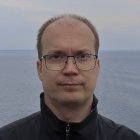
Pekka Ruponen
Pekka Ruponen is a Lead Research Engineer at NAPA. He previously served as a Part-time Professor of Practice in Hydrodynamics at Aalto University, Department of Mechanical Engineering, Marine Technology. He has a robust skill set that includes Naval Architecture, Ships, Engineering, Maritime, Safety Management Systems, and more.
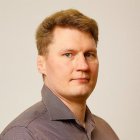
Mikko Suominen
Mikko Suominen is an Assistant Professor at the Department of Energy and Mechanical Engineering at Aalto University.
His research focuses on ship performance in ice and ice-induced loads on the ship hull measurements in model-scale and full-scale. He is specially interested in measurement methods and technology related to these topics. In addition, ice conditions measurements and determination (e.g. mechanical properties of ice and ice thickness) have been closely related to his research. Currently, his research has been focusing more on model-scale testing and scaling methods (representation of full-scale processes in model-scale testing in ice). He has been conducting full-scale measurements on board different vessels and ice field in the Baltic Sea, Canadian Arctic and Antarctic waters.
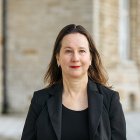
Ulla Tapaninen
Ulla Tapaninen is Tenured Full Professor (maritime transport) at Tallinn University of Technology, Estonia, heading the Maritime Transport Research Group in the Estonian Maritime Academy. She is also Adjunct Professor (maritime economics and logistics) at University of Turku, Finland.
Tapaninen has over 30 years’ experience in logistics and maritime transport in academia, public and private sector. She has worked in key positions in two Finnish shipping companies (bulk and RoRo sector) and worked as a senior expert at City of Helsinki in charge of maritime cluster development. Presently, she in board of Port of Helsinki, one of the busiest intenational passenger ports in the world. She has published dozens of peer-reviewed journal articles, conference papers, and reports as well as other publications in scientific and non-scientific journals. She is a frequent speaker in seminars. She has published a textbook Maritime Transport by Kogan Page presenting the fundamentals of maritime business. She also publishes a blog ullatapaninen.net presenting contemporary issues in maritime transport.
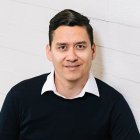
Osiris Valdez Banda
Osiris Valdez Banda is an Assistant Professor at Aalto University, in the Department of Energy and Mechanical Engineering (Marine and Arctic Technology), and the leading professor of the Research Group on Safe and Efficient Marine and Ship Systems.
His research focuses on the analysis of marine risks and safety systems engineering, with applications in smart shipping and ship winter navigation. His work involves the development of methods, processes, and tools for modeling and analyzing the risks, safety, and resilience of ship and marine systems, supporting the design of advanced ship concepts and technologies, and ensuring the management of safety in maritime traffic operations.
Program Fee and Registration
The fee for the Sustainable Maritime Operations in Global Context online course is € 150 (+ VAT).
This program has adopted Aalto EE's new Customer ID, and it is delivered on Aalto Learning Experience Alex e-learning environment. Before ordering, please visit aaltoee.fi/customerid.

Program start