









AI Methods and Applications
The AI Methods and Applications is a study module in the Data, Analytics, and AI for Professionals program and can also be taken as a stand-alone program.
How do various AI methods differ from one another? What can AI applications do in organizations? Discussions about AI in organizations often take place at a high level. This module equips you with the ability to understand AI’s practical applications.
The AI Methods and Applications program explores what can be achieved with AI in practice. You will learn about the role of data, analytics, and AI, and how they can be leveraged to strengthen and enhance organizational practices. Additionally, you will learn to discuss the concrete impact of different technology choices.
The program covers the foundational elements of machine learning, including supervised, unsupervised, and reinforcement learning, as well as computer vision through classical and deep learning methods. You will explore practical AI applications, including personalization technologies, recommendation systems, and descriptive and predictive analytics. The program also includes a hands-on demonstration of a commercial application; however, no prior coding experience is required.
If the participant successfully completes the program and later enrolls in the Aalto Executive MBA or MBA program, up to 4.5 ECTS credits may be recognized toward MBA studies within five years.
RegisterDownload Data, Analytics, and AI for Professionals brochure


Benefits
As AI technologies advance, understanding their practical application and strategic potential is increasingly important. This program equips you with hands-on knowledge of the most relevant technologies, including machine learning, computer vision, personalization through recommendation systems, and generative AI. You will build the skills to evaluate, select, and apply the right methods to various organizational challenges. Additionally, you will learn about advanced AI techniques and their implementation, helping you to contribute to data-driven initiatives and technology decisions within your own organization.




For
The program is for anyone who seeks to gain a deeper understanding of data analytics and AI technology and the skills to apply these tools in their work.
The program is well-suited to, for example:
- IT specialists, managers, and directors
- Analysts
- Business development leaders and managers
- HR professionals
- Product managers
- Cloud engineers
- Programmers and developers
- Engineers from different fields
Content and Schedule
AI Methods and Applications comprises a three-day study module, a written pre-assignment, and a take-home assignment. The program is worth 4.5 ECTS credits.
The program explores the practical applications of data and analytics, with a focus on machine learning, computer vision, personalization, and generative AI, illustrated through concrete business examples. You will gain an understanding of core AI methods, including supervised, unsupervised, and reinforcement learning, as well as descriptive and predictive analytics. The program highlights how AI can be applied to improve organizational efficiency, enable personalization through recommendation systems, and support innovation and competitive advantage. It also provides insight into the strategic role of advanced AI methods, their integration with data strategies, and common implementation and deployment challenges, supported by demonstrations of both commercial and open-source AI tools.
The program combines three interactive module days with practical assignments that encourage you to apply the learnings to real-world questions. Participants also engage in discussions and networking with like-minded professionals.
Instructors
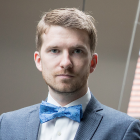
Arno Solin
Arno Solin is an Associate Professor in Machine Learning and Academy of Finland Research Fellow at the Department of Computer Science at Aalto University.
Solin is also an ELLIS Scholar and holds an Adjunct Professorship (Title of Docent) at Tampere University, serves as a member of the Young Academy Finland, and is the coordinating professor of the ‘Next-generation Data-efficient Deep Learning’ program of the Finnish Center of Artificial Intelligence (FCAI). His research interests are data-efficient machine learning, especially in probabilistic methods for real-time inference and sensor fusion.
At Aalto, Solin leads a machine learning research group. He is an Editorial Board Reviewer for JMLR and an Area Chair for NeurIPS, ICML, ICLR, and AISTATS. He gave a tutorial on Machine Learning with Signal Processing at ICML 2020. He is a winner of the ISIF 2018 Jean-Pierre Le Cadre Best Paper Award, and he won the MLSP 2014 Schizophrenia Classification Challenge on Kaggle. He is also a co-founder of Spectacular AI, a sensor fusion and spatial AI start-up.
Previously, Solin was a team lead in industry (2015–2017) and held an Academy of Finland post-doctoral fellowship (2017–2020). He has also held visiting researcher positions in Prof. Neil Lawrence's group at the University of Sheffield (2013), the Computational and Biological Learning Lab (CBL) at the University of Cambridge (2017–2018), and Prof. Thomas Schön's group at Uppsala University (2019). He co-authored the book Applied Stochastic Differential Equations, published by Cambridge University Press.

Marko Turpeinen
Marko Turpeinen is an Adjunct Professor at Aalto University School of Science.
Turpeinen is also the founder and CEO of a data-sharing company called 1001 Lakes.
He was previously the Finnish Node Director of EIT Digital, a Knowledge and Innovation Community of the European Institute of Innovation and Technology and a Professor in Media Technology at The Royal Institute of Technology (KTH) in Stockholm. He has extensive industrial experience in the media industry, as between 1996 and 2005 he worked in various executive positions at Alma Media Corporation, a Finnish media company.
His current academic research addresses issues in customized media content, a human-centric approach to personal data, and the role of AI and algorithmic power in networked society. He has a Doctor of Technology Degree in Computer Science from Helsinki University of Technology (now Aalto University) and a Master of Science Degree in Media Arts and Sciences from Massachusetts Institute of Technology (MIT).

Teemu Roos
Teemu Roos is a Professor at the Department of Computer Science, University of Helsinki.
Roos' research interests include the theory and applications of artificial intelligence, machine learning, and data science. He also teaches introductory courses on these topics with a total of up to 500 students annually. He has developed applications of AI in areas such as mobile computing, genomics, epidemiology, quantum physics, and digital humanities.
Teemu Roos received a Ph.D. in computer science from the University of Helsinki in 2007.
Program Fee and Registration
Other Data, Analytics, and AI for Professionals Modules
You can register for individual stand-alone Data, Analytics, and AI for Professionals modules or take the complete Data, Analytics, and AI for Professionals program, including all four modules.